Warm, Imperfect, and Alive: Why Producers Keep Reaching for Gear That's Older Than Their Grandparents
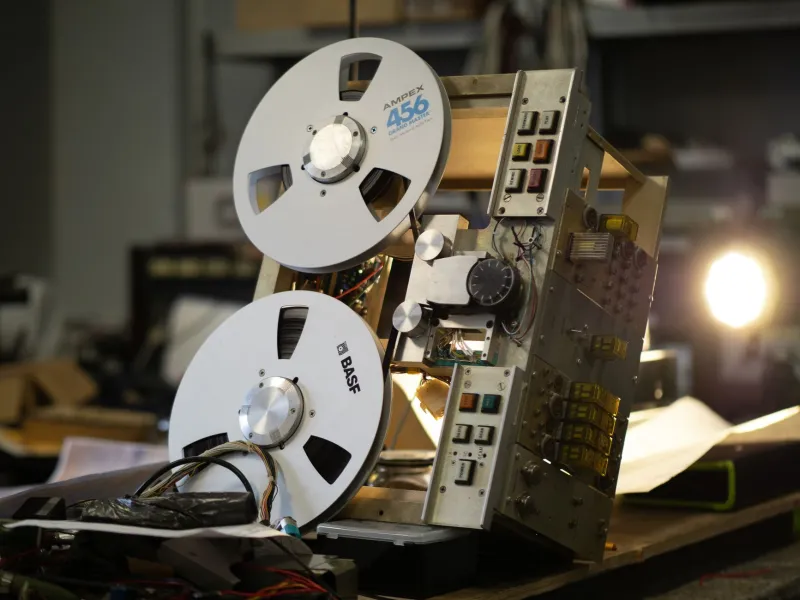
Somewhere in a studio tucked into the hills above Nashville, a producer is threading two-inch magnetic tape through a machine that weighs more than a refrigerator. The machine was built in the 1960s. It has been repaired so many times it's practically a ship of Theseus. And yet, according to the people in that room, nothing else on the planet sounds quite like it.
This isn't nostalgia. Or at least, it isn't only nostalgia. It's a growing acknowledgment — spreading from jazz and country into hip-hop, indie rock, and even pop — that the tools of the golden era captured something in sound that modern digital precision, for all its breathtaking capability, still hasn't fully replicated.
So what's actually going on? Why does a microphone designed in 1951 still command prices north of ten thousand dollars on the used market? Why are engineers lining up to rent time on tape machines that require more maintenance than a vintage automobile? The answer lives somewhere between physics and philosophy.
The Tube Mic and the Ribbon: A Short History of Warmth
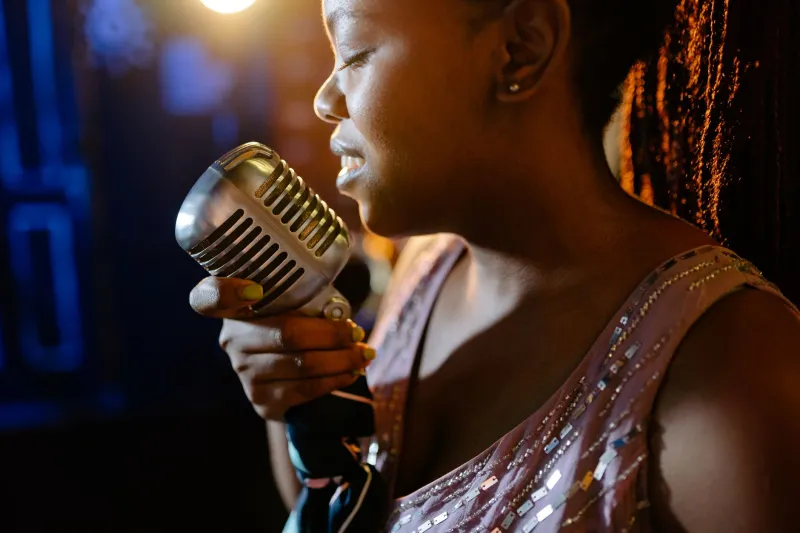
Before condenser microphones went solid-state and digital workstations swallowed entire control rooms, recording studios ran on vacuum tubes and ribbon elements. Tube microphones — like the legendary Neumann U47 or the AKG C12 — used glass tubes to amplify the signal before it ever hit tape. The result was a kind of harmonic coloring, a subtle saturation of the sound that added what engineers still describe simply as warmth.
Ribbon microphones work differently. A thin strip of corrugated aluminum foil suspended between two magnets responds to the velocity of air molecules rather than pressure. The result is a natural high-frequency rolloff that softens harsh transients and gives voices and instruments a rounded, almost three-dimensional quality. Buddy Holly sang through ribbon mics. So did Frank Sinatra. So did a thousand session musicians in studios from Muscle Shoals to Sunset Boulevard whose names you'll never know but whose performances you've heard ten thousand times.
When solid-state electronics arrived in the '60s and '70s, they brought clarity and consistency. When digital recording arrived in the '80s and '90s, it brought near-perfect accuracy. But somewhere along the way, a lot of engineers started noticing that perfect accuracy wasn't the same thing as great sound.
The Physics of Imperfection
Here's the thing about analog gear that takes most people a minute to wrap their heads around: the "flaws" are the feature.
Tape machines, for example, introduce a phenomenon called tape saturation. When a signal is recorded hot onto magnetic tape, the tape physically can't capture the full dynamic extremity of the transient — the initial attack of a drum hit, say, or the leading edge of a guitar chord. Instead, it compresses and rounds that peak in a way that's actually pleasing to the human ear. The result sounds controlled and powerful without sounding squashed. Engineers spend enormous amounts of time with digital tools trying to replicate this exact behavior, and the best of them get pretty close. But pretty close is still close.
Tube amplification adds harmonic distortion — specifically, even-order harmonics, which are mathematically related to the original signal and blend into it in a way that sounds musical rather than harsh. It's the difference between a voice that sounds like it's being transmitted and a voice that sounds like it's in the room with you.
Ribbon mics, meanwhile, have a figure-eight polar pattern that picks up sound from both front and back while rejecting the sides. In a live room, this means they're capturing natural room ambience in a way that feels organic rather than artificially reverbed. The room becomes part of the instrument.
Producers Who Still Swear by the Old Ways
Talk to any working producer with serious credits and the subject of vintage gear comes up fast. T Bone Burnett, who has shaped the sound of everyone from Robert Plant to Alison Krauss to Bob Dylan, has been vocal for decades about his preference for analog signal chains. His reasoning isn't sentimental — it's practical. The recordings hold up. They sound as alive in twenty years as they did the day they were made.
Younger producers are catching on too. A new generation of engineers working in hip-hop and R&B — genres that largely built their identity on digital tools — have started integrating vintage outboard gear into sessions. Running a sample through a real tape machine before chopping it. Printing vocals through a tube preamp before they ever touch a plugin. The goal isn't to sound retro. It's to sound real.
In Los Angeles, several high-end studios have invested heavily in restoring vintage console desks — SSL 4000s, Neve 8078s — that were nearly scrapped when digital took over. Rental demand for these rooms has reportedly increased year over year as artists seek that particular quality of sound that no DAW has fully bottled.
What Digital Does Better (And Why That's Not Enough)
None of this is to say digital recording is a mistake. It's extraordinary, actually. The ability to edit with surgical precision, recall sessions perfectly, collaborate across time zones, and produce professional work without a $500-an-hour studio — these things democratized music creation in ways that genuinely matter. Bedroom producers have made records that changed culture. That's real.
But there's a reason those same bedroom producers, when they finally get the budget, often take their tracks into an analog room for mixing or mastering. Digital captures everything. Analog interprets things. And interpretation, it turns out, is closer to what music actually is.
The human ear didn't evolve to appreciate perfect mathematical accuracy. It evolved in rooms, in forests, in spaces full of reflection and resonance. Analog gear, with all its quirks and saturation and frequency response curves, sounds more like those spaces. More like the world we actually live in.
Going Backward to Move Forward
There's something deeply on-brand for a site like this one in the idea that the best path forward sometimes runs directly through the past. The golden era of recording — those decades when engineers were still figuring out how to capture sound and accidentally invented most of the techniques we still rely on — produced recordings that remain benchmarks. Kind of Blue. Pet Sounds. Aretha Live at Fillmore West. These aren't just culturally important. They sound incredible. Still, today, on any speaker system you care to name.
The engineers who made those records weren't working with limitations. They were working with tools, and they understood those tools deeply. Today's best producers are learning that lesson all over again. Not to reject digital — that would be foolish — but to understand what analog brought to the table and to stop pretending software alone can replace it.
So the next time you hear a vocal that sounds like it's breathing, a drum kit that sounds like it's in the room, a guitar that sounds warm and present and alive — there's a reasonable chance someone reached for a microphone older than your parents. And made exactly the right call.