Clack, Ding, Return: Why Serious Writers Are Going Back to the Machine
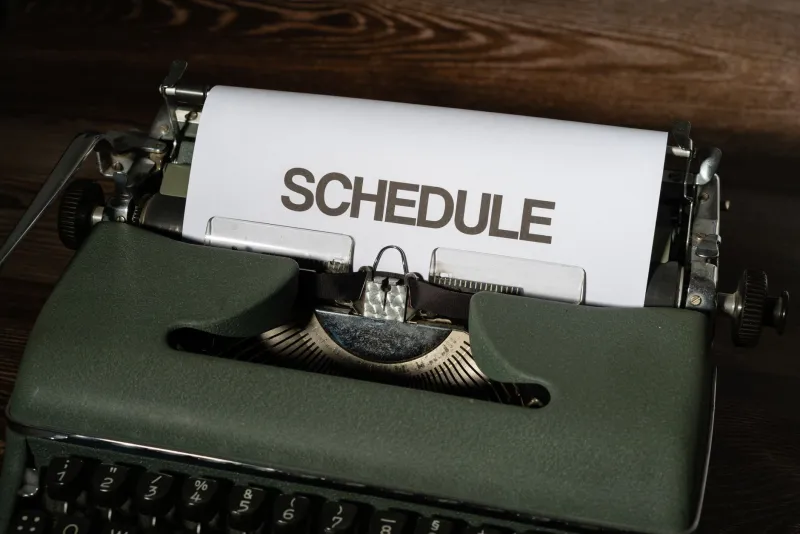
There's a sound that used to fill newsrooms, hotel rooms where novelists holed up for weeks, and the cramped apartments of poets who believed in the work above everything else. It's the sound of a typewriter doing exactly what it was built to do — converting thought into permanence, one keystroke at a time. That sound never really disappeared. But lately, it's getting louder.
Across the United States, a genuinely surprising number of writers — not hobbyists, not vintage collectors playing dress-up, but working authors, journalists, and screenwriters — have started reaching for mechanical typewriters as their primary drafting tool. The reasons are practical, psychological, and maybe a little philosophical. And the more you dig into it, the more sense it makes.
The Noise That Helps You Focus
Ask anyone who's made the switch and the first thing they'll mention isn't nostalgia. It's the absence of everything else.
No browser tabs. No notification banners sliding in from the top right corner of the screen. No email. No Discord. No temptation to Google something mid-sentence and lose forty-five minutes down a rabbit hole about the history of whatever word you just typed. Just paper, ribbon, and the mechanical resistance of keys that demand you mean what you press.
Writer and essayist Marcus Dellacroix, based out of Portland, Oregon, describes his first week back on a 1963 Olympia SM9 as "genuinely alarming — alarming because I realized how little actual writing I'd been doing when I thought I was writing." He estimates his daily word output on first drafts doubled within two weeks of ditching his laptop. "The machine doesn't care about your inbox," he says. "It just waits. And somehow that waiting is the most motivating thing I've ever experienced."
This isn't just anecdote. Psychologists who study attention and creative output have noted that constraint — real, physical constraint — can be a surprisingly powerful driver of focus. When your only option is to write, you write. The typewriter enforces a kind of radical presence that even the best app-based focus tools struggle to replicate.
Intentionality by Design
Here's the thing about typing on a screen: deletion is free. Revision is instant. The backspace key exists to make your mistakes disappear before they ever fully form. That sounds like a feature — and it is — but it also quietly trains your brain to treat first drafts as something disposable, something to be corrected in real time rather than committed to and revised later.
The typewriter flips that psychology entirely. When a wrong word costs you ink, paper, and the physical effort of correction fluid or a full restart, you start choosing words more carefully before you commit them. You think in sentences rather than fragments. You develop what some writers call "typewriter patience" — a willingness to sit with an idea long enough to actually understand it before putting it down.
Screenwriter Joelle Fontaine, who works out of Los Angeles and has credits on two streaming series you've almost certainly watched, keeps a Royal Quiet De Luxe on her desk specifically for breaking story. "Screens make everything feel provisional," she told us. "The typewriter makes it feel real. When I type a scene on paper, I'm committing to it. That commitment changes how I think about the work."
The Status Symbol Nobody Expected
Let's be honest about something else going on here: typewriters have become genuinely cool in a way that feels earned rather than manufactured. A well-maintained Hermes 3000 or a mint-condition Smith Corona Sterling sitting on a desk communicates something about the person who owns it — that they care about craft, that they're not chasing convenience, that they have taste that predates the algorithm.
The vintage market reflects this. Machines that were gathering dust in thrift stores a decade ago now sell for serious money. A fully restored 1950s Olivetti Lettera 22 can fetch anywhere from $200 to $600 depending on condition and color. Specialty shops like AMES Bros. Typewriter in Oakland and Gramercy Typewriter Co. in New York City have waiting lists. The community around typewriter maintenance and restoration — the "typosphere," as enthusiasts call it — has grown into a genuine subculture with meetups, newsletters, and enough Instagram presence to make any social media manager jealous.
But the status piece cuts deeper than aesthetics. In an era where everyone has access to the same software, the same fonts, the same templates, there's something quietly radical about producing a manuscript page that looks and feels unlike anything a computer could generate. The slight irregularity of the type. The pressure variations between keystrokes. The faint ghost of the letter beneath the one that came after it. These are marks of a human hand at work, and they're impossible to fake.
Not a Rejection — A Return
It would be easy to frame all of this as anti-technology sentiment, a bunch of writers shaking their fists at the digital world. But that's not quite right. Most typewriter enthusiasts aren't abandoning their computers entirely. They're using the machine for what it does best — generating raw, committed, distraction-free first drafts — and then digitizing those pages for editing and revision.
It's a workflow, not a manifesto. And it's one that a surprising number of serious creative professionals are finding genuinely transformative.
What the typewriter revival really reflects is something Royce 59 has been tracking for a while now: a growing hunger for tools that push back, that demand something from you, that make the process of creation feel like it matters. Vinyl records. Film photography. Hand-drawn animation. The typewriter fits right into that lineage — objects from the golden era of craft that understood, maybe better than we do now, that the friction is the point.
The clack isn't just satisfying. It's proof that something real just happened.
Where to Start
If you're curious about making the switch — even just for an experimental month — the barrier to entry is lower than you might think. Estate sales, eBay, and local antique shops are still the best hunting grounds for affordable machines. Brands worth seeking out for beginners include the Olympia SM series, the Royal Quiet De Luxe, and the Hermes Baby, all of which are known for reliability and relatively easy maintenance.
Get it serviced if you can. A clean, well-adjusted typewriter is a completely different experience from a stiff, sticky one. And then just sit down with a blank page and see what happens when the only direction you can go is forward.
Some of the best writing ever put to paper was produced under exactly those conditions. There might be a reason for that.