One Year That Changed Everything: The Jazz Cats of '59 Who Rewrote the Rules of Sound
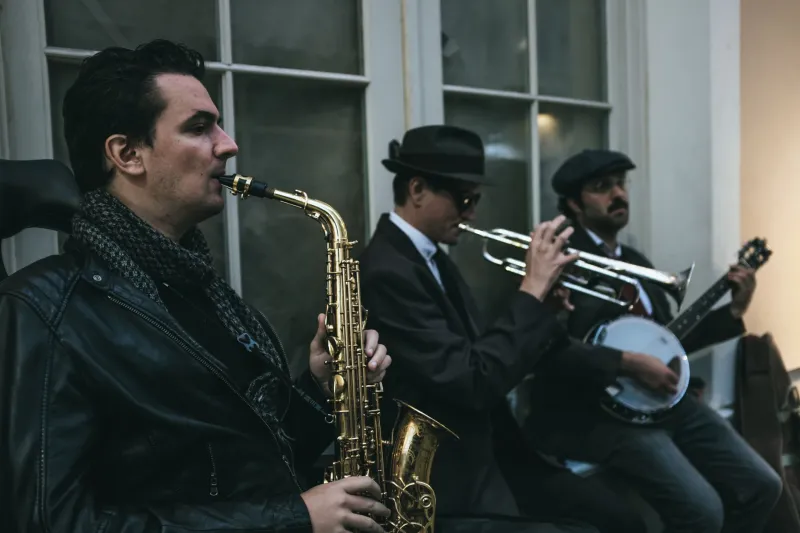
There are years in music history that feel, in hindsight, almost too loaded to be real. Nineteen fifty-nine is one of them. In a single calendar year, a small constellation of musicians — working in New York studios, smoky clubs, and cramped rehearsal spaces — produced a body of work so dense with innovation that the reverberations are still shaking speakers in 2024. We're not talking about nostalgia here. We're talking about living DNA.
If you've ever nodded your head to a Kendrick Lamar verse, felt something shift in your chest during a Frank Ocean bridge, or caught yourself hypnotized by a J Dilla beat, you've already heard 1959. You just didn't know it.
Miles Ahead, Miles Apart
Let's start where most conversations about this year have to start: Kind of Blue. Released in August of 1959, Miles Davis's landmark record didn't just change jazz — it quietly reorganized the entire emotional architecture of American popular music. The album ditched the complex chord progressions that bebop had made fashionable and replaced them with modal scales, giving the musicians room to breathe, wander, and feel their way through the music rather than solve it like a puzzle.
What came out was something that sounded less like performance and more like conversation. "So What" opens the record with a bass line so patient and deliberate it almost dares you to rush it. You can't. And that refusal to hurry — that insistence on space as a musical element — shows up in neo-soul, in lo-fi hip-hop, in the slow-burn production of artists like Sade and Anderson .Paak decades later.
Kind of Blue remains the best-selling jazz album in history. That's not an accident. It's a testament to how deeply its emotional logic is baked into how Americans hear music.
Trane Running
While Miles was pulling inward, John Coltrane was pushing outward. Also in 1959, Coltrane released Giant Steps — an album that hit the jazz world like a math problem and a spiritual experience at the same time. The chord changes Coltrane introduced, later dubbed "Coltrane changes" by theorists, were so advanced that even his bandmates struggled to keep up in real time.
But here's the thing about Giant Steps that gets lost when people talk about it in purely technical terms: it burns. There is an urgency, an almost desperate forward momentum to that record that feels less like a musician showing off and more like someone trying to outrun something. That hunger — that restless reaching — is exactly what you hear in the work of musicians like Kamasi Washington, whose 2015 opus The Epic wore its Coltrane influence like a badge of honor, or in the saxophone-laced productions of Flying Lotus.
Coltrane didn't just influence jazz. He gave an entire generation of artists permission to want more from their music than the format was supposed to allow.
The Outsider Who Changed the Inside
If Davis and Coltrane were stretching the rules, Ornette Coleman was busy setting them on fire. His 1959 debut on Atlantic Records, The Shape of Jazz to Come, announced the arrival of free jazz — a form so radical that some critics at the time genuinely questioned whether it qualified as music at all.
Coleman ditched fixed harmonic structure almost entirely, letting melody and rhythm exist in a kind of productive tension that had no real precedent. It was chaotic, yes, but it was also deeply, unmistakably human. Imperfect. Searching. Alive.
Hip-hop producers have been quietly raiding that aesthetic for decades. The willingness to let a sample sit slightly off-center, to let a beat breathe in an unexpected place, to find the groove in the dissonance — that's Coleman's ghost in the machine. Producers like Madlib have cited the free jazz tradition as foundational to their approach, and you can hear it in the way his beats refuse to sit still.
The Template Nobody Admits They're Using
Here's what's wild about 1959's legacy: it operates mostly underground. You won't find many mainstream pop artists name-dropping Ornette Coleman in interviews. But trace the lineage of enough contemporary Black American music and you will keep arriving at the same address — a handful of recordings made in a single year by a group of musicians who were, in many cases, broke, underappreciated, and fighting for respect in an industry that didn't always know what to do with them.
Samplers changed everything. When hip-hop producers began digging through crates in the 1980s and '90s, they weren't just looking for breaks — they were, often without fully realizing it, continuing a conversation that 1959 had started. A Miles Davis phrase filtered through a drum machine. A Coltrane motif flipped into a hook. The architecture was already there. The new generation just moved in and redecorated.
Artists like Thundercat, Erykah Badu, and Robert Glasper have been more explicit about the connection, building careers that function almost as translations — taking the emotional vocabulary of mid-century jazz and rendering it in a language that contemporary audiences can feel in their bones.
Why It Still Matters
Royce 59 exists in the belief that the golden era never really fades — it just gets absorbed. The innovations of 1959 aren't museum pieces. They're active ingredients. Every time a producer chooses space over clutter, every time a vocalist lets a note hang in the air a half-beat longer than expected, every time a songwriter reaches for something emotionally true over something commercially safe — that's 1959 talking.
The architects of cool didn't build something timeless by accident. They built it by refusing to accept the limits of what music was supposed to be. And the best artists working today are honoring that refusal every time they sit down to make something real.
The year 1959 ended. The music never did.