The Future That Never Arrived (And Why We Can't Stop Selling It)
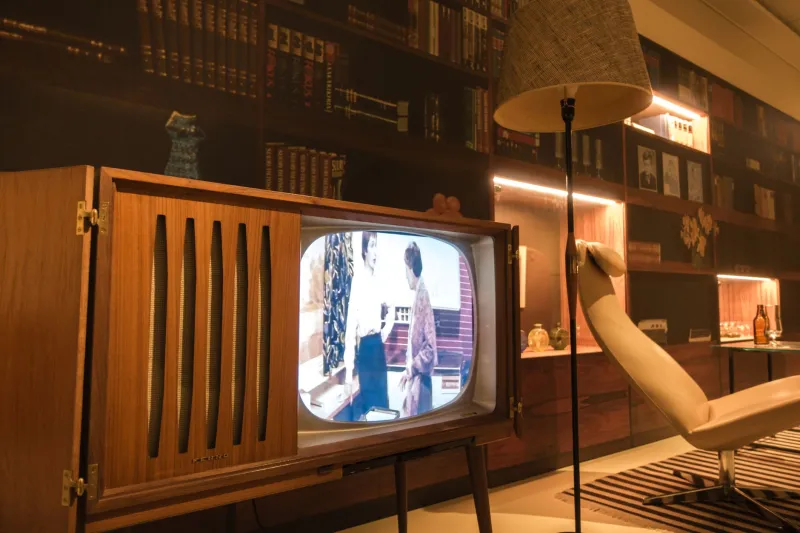
Picture this: a kitchen with atomic-starburst wallpaper, a turquoise refrigerator with chrome handles, and a wall clock shaped like a satellite. Outside, a tailfin car idles in the driveway. Somewhere in the background, a reel-to-reel plays something breezy and optimistic. The whole scene hums with the quiet confidence that technology is going to fix everything and the future is going to be gorgeous.
That world never fully existed. But right now, in 2024, it's selling better than ever.
Welcome to retro futurism — the aesthetic time loop that has designers, brands, and a generation of young Americans obsessed with a tomorrow that was imagined seventy years ago and never quite showed up.
When Optimism Had a Color Palette
To understand why this aesthetic hits so hard today, you have to understand what it felt like to be an American in the late 1950s and early '60s. The country had just come through a world war, the economy was booming, and technology was moving at a pace that felt genuinely miraculous. Television was new. Jet travel was new. The space race made it feel like the sky wasn't even close to the limit.
Designers responded to that cultural mood with a visual language that was all confidence and forward lean. Eero Saarinen's tulip chairs. Raymond Loewy's Studebaker. The Googie architecture of California diners, with their jutting angles and neon signs that looked like they were trying to escape into orbit. Everything pointed up and forward. Everything implied: this is just the beginning.
The aesthetic wasn't accidental. It was aspirational design made physical — a civilization drawing a picture of itself at its most hopeful.
How We Got Obsessed Again
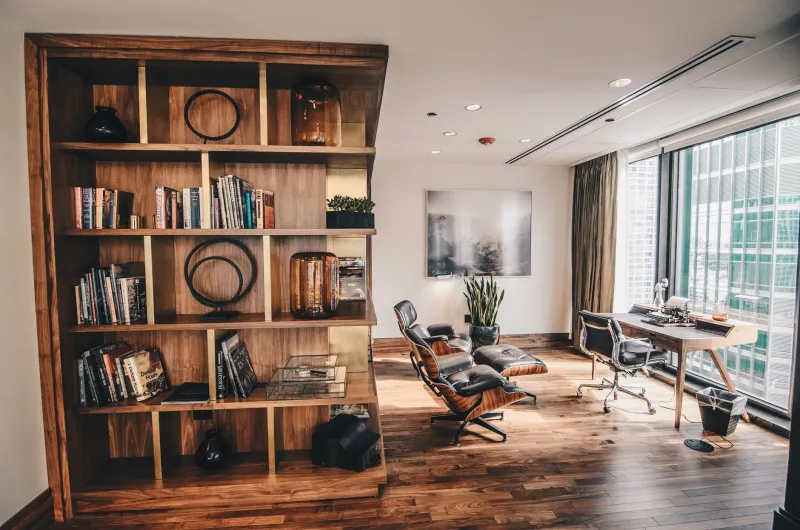
Fast forward to the early 2000s and that visual language had been largely retired to nostalgia shops and kitschy diners. Then something shifted. Design culture started quietly pulling from the mid-century toolkit — clean lines, warm wood tones, organic shapes, that particular shade of avocado or burnt orange that screams 1962 without apology.
Apple played a significant role. The company's early design philosophy under Jony Ive borrowed heavily from mid-century modernism's obsession with simplicity and material honesty, giving those sensibilities a sleek, digital update. When the first iMac launched in its translucent candy colors, it was doing something very specific: it was making technology feel friendly and optimistic in a way that echoed exactly what designers in 1958 were trying to do with a refrigerator.
That instinct trickled everywhere. By the mid-2010s, mid-century modern was the dominant aesthetic in American home design. Wayfair built a business on it. West Elm made it aspirational. IKEA made it accessible. The tulip chair came back. The credenza came back. The sunburst mirror came back.
And then Gen Z arrived on TikTok with their thrifted finds and bedroom makeovers, and the whole thing hit a new gear.
The TikTok Time Machine
There's a specific corner of TikTok — and it's a large corner — dedicated to what users call "vintage aesthetic" spaces. Warm lighting, record players, mid-century furniture, lava lamps, rotary phones used purely as objects. The comments on these videos are full of young people saying things like "this is my dream home" and "why does the past feel more comforting than the present?"
That question is worth sitting with. Because here's the thing: the past these creators are romanticizing is largely a constructed one. The mid-century American home that looks so appealing on screen was also a place of rigid social structures, racial segregation, and limited options for most people who weren't white, male, and middle-class. The optimism of the era had asterisks attached to it that the aesthetic conveniently leaves out.
But that's sort of the point of retro futurism as a cultural phenomenon. It's not history — it's vibe. It takes the warmth and the visual confidence of a particular era and divorces them from the context, leaving you with something that feels emotionally satisfying in a way that the present often doesn't.
And honestly? In an era of algorithmic anxiety, climate dread, and information overload, the appeal of a world that looked like it had everything figured out — even if it didn't — makes a certain kind of sense.
Brands Selling You a Past That Never Existed
The commercial machinery around this aesthetic is enormous and getting bigger. Automakers like Volkswagen and MINI spent years leaning on retro design cues to sell nostalgia to buyers who were, in many cases, too young to have experienced the originals. Cadillac's recent design language has pulled hard from the tailfin era. Even electric vehicles — the most forward-looking product category on the market — are being styled with mid-century callbacks. The Rivian pickup truck looks like it was designed by someone who loved both 1962 and 2042 equally.
Fashion has done the same. Brands like Rowing Blazers and Kule have built entire identities around the preppy, optimistic palette of mid-century American style. On the luxury end, the revival of brands like Halston and the continued dominance of Lilly Pulitzer speak to the same hunger for an aesthetic that feels curated, confident, and — crucially — uncomplicated.
What's being sold isn't accuracy. It's feeling. The feeling that things were better-looking, more considered, more intentional. Whether that was ever true is almost beside the point.
The Golden Era That Lives in the Imagination
Royce 59 was built on a premise that the golden era never fades — and retro futurism is maybe the clearest proof of that idea in contemporary culture. We keep returning to the 1950s and '60s not because those decades were perfect, but because they produced an aesthetic that was genuinely, stubbornly hopeful. A visual language that said: the future is something to look forward to.
In a cultural moment that often struggles to imagine a better tomorrow, there's something quietly radical about borrowing that optimism — even if it comes in the form of a sunburst clock or a tailfin-inspired fender.
The future that mid-century designers dreamed up never fully arrived. But the dream itself? That's still very much for sale. And apparently, we're still buying.