Curves, Chrome, and Clocks: How the Designers of the '50s Built a World We're Still Living In
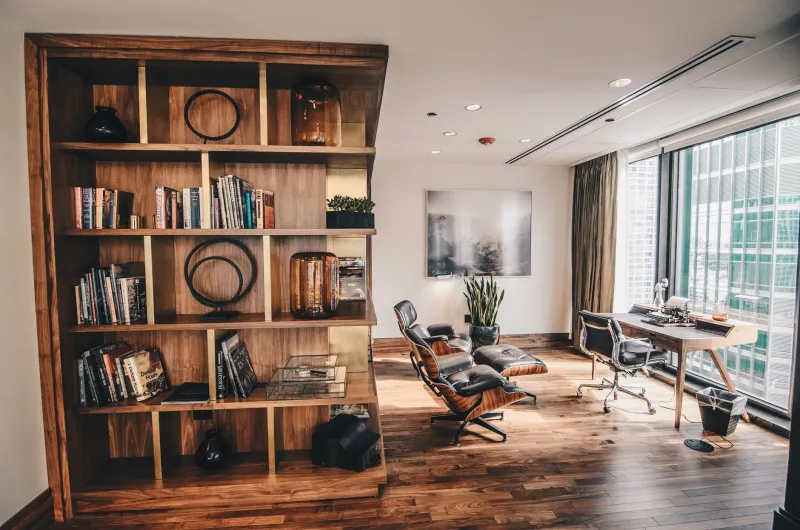
Walk into any coffee shop worth its cold brew right now and you'll spot at least three of them: the molded plastic chair with tapered legs, the sunburst wall clock, the low-slung sofa that looks like it belongs on a set from Mad Men. Mid-century modern is everywhere, and it has been for a while. But here's the thing — it never actually left. The design language that took shape in postwar America is so deeply embedded in how we think about beautiful spaces that we barely notice it anymore. It's just... home.
So where did all of it come from? And who were the people behind the chairs, the lamps, and the kitchen appliances that made the 1950s look like the future?
The Eameses: A Partnership That Rewired American Living
You can't talk about mid-century design without spending serious time with Charles and Ray Eames. This husband-and-wife duo out of California essentially invented the template for what affordable, beautiful, functional furniture could look like. Their molded plywood and fiberglass chairs — developed partly through experiments funded by the U.S. Navy during World War II — brought sculptural design down from the realm of wealthy collectors and put it in living rooms across the country.
What made the Eameses genuinely revolutionary wasn't just the aesthetic, though. It was the idea behind it. They believed deeply that good design should be accessible. The Eames Lounge Chair, introduced in 1956, became an icon — and it still retails today through Herman Miller at a price that'll make your eyes water. But the molded plastic side chair? That thing was meant for everyone. Schools, offices, airport terminals. Design as democracy.
Their influence is so pervasive now that most people buying a molded plastic chair at a discount furniture store have no idea they're essentially buying a watered-down echo of something Charles and Ray spent years perfecting.
George Nelson and the Clock That Ate the Wall
If you've ever owned a sunburst clock — or photographed one for Instagram — you owe a nod to George Nelson. As design director at Herman Miller through much of the 1950s, Nelson had an almost absurd amount of influence over how American homes were furnished and decorated. But it's his clocks that became the defining artifact of the era.
The Ball Clock, the Asterisk Clock, the Sunflower — Nelson's timepieces weren't just about telling time. They were sculptural statements, little explosions of modernist optimism hanging on kitchen walls across the country. The message was clear: the future is here, and it looks good.
Nelson also coined the concept of the "storage wall" — essentially the built-in shelving unit that now shows up in every open-plan living space in America. Before Nelson articulated it, the idea of an entire wall functioning as organized, beautiful storage was genuinely novel. Today it's just called having a living room.
The Atomic Age Kitchen: Where Science Met the Stove
The 1950s American kitchen deserves its own hall of fame. Postwar optimism and a booming consumer economy collided to produce some of the most visually striking domestic spaces ever designed. Pastel refrigerators in mint green and coral pink. Formica countertops with boomerang patterns. Chrome everything.
Brands like Frigidaire and Westinghouse were competing not just on appliance performance but on vision. Their showrooms looked like science fiction. The "Kitchen of Tomorrow" was a recurring exhibit at World's Fairs and department stores, promising housewives push-button cooking and automatic dishwashers. Some of it was fantasy. A lot of it, eventually, became Tuesday.
The atomic motif — those starburst and molecule patterns that showed up on everything from wallpaper to dishware — reflected a genuine cultural fascination with science and progress. It wasn't ironic. People were genuinely thrilled about atoms. The aesthetic that came out of that moment is now considered peak retro chic, and companies like Smeg have built entire brand identities around selling us colorful, rounded appliances that look like they belong in a 1958 kitchen.
Why Millennials and Gen Z Can't Let Go
Here's where it gets interesting. Mid-century modern has had multiple revival cycles, but the current obsession — particularly among younger Americans — feels different. It's not purely nostalgic, because most millennials and Gen Z weren't alive during the era. It's something closer to inherited longing.
Part of it is reaction. After decades of ultra-minimalist Scandinavian design (all white walls and invisible handles), the warmth and personality of mid-century furniture feels like a breath of fresh air. Walnut wood. Tapered legs. A lamp that looks like it has opinions. These pieces have character.
Platforms like Pinterest and Instagram have also played a massive role. The visual language of mid-century design photographs beautifully — strong lines, warm tones, satisfying symmetry. An Eames chair in a sunlit room is practically engineered to go viral.
There's also an authenticity factor. In a world of fast furniture and disposable décor, the fact that a well-made mid-century piece from the 1950s is still functional and beautiful today means something. These weren't throwaway objects. They were built with intention.
The Designers We Forget to Credit
For every Eames and Nelson, there are a dozen names that deserve more recognition. Florence Knoll, who essentially invented the modern corporate office interior. Paul McCobb, whose Planner Group furniture brought modernist design to the middle class before the Eameses got all the credit. Russel Wright, whose American Modern dinnerware made organic shapes a fixture of the American table.
These designers weren't working in isolation. They were responding to a specific cultural moment — postwar prosperity, technological optimism, a genuine belief that design could improve everyday life. That belief is baked into every piece they made, and maybe that's why the work still resonates. It's not just furniture. It's a philosophy about what home should feel like.
The Golden Era Never Really Ended
At Royce 59, we talk a lot about how the golden era never fades — and mid-century design is about as clean an example of that as you'll find anywhere. The chairs are still in production. The clocks are still on walls. The kitchens are still being recreated, one avocado-green refrigerator at a time.
The designers of the 1950s weren't just building for their moment. They were, almost accidentally, building for all of ours.