Spinning Back: How Gen Z Fell Head Over Heels for Vinyl and Flipped the Music Industry Upside Down
Vinyl records were supposed to be a relic — a dusty artifact your dad kept in the garage next to his old baseball glove and a broken lava lamp. But something wild happened on the way to the streaming era: a whole new generation decided the crackle and warmth of a record player was exactly what they'd been missing. Here at Royce 59, where the golden era never fades, we've been watching this trend with a knowing smile. The kids aren't just alright — they're onto something the rest of us never fully let go of.
From Spotify Playlists to Side A, Track One
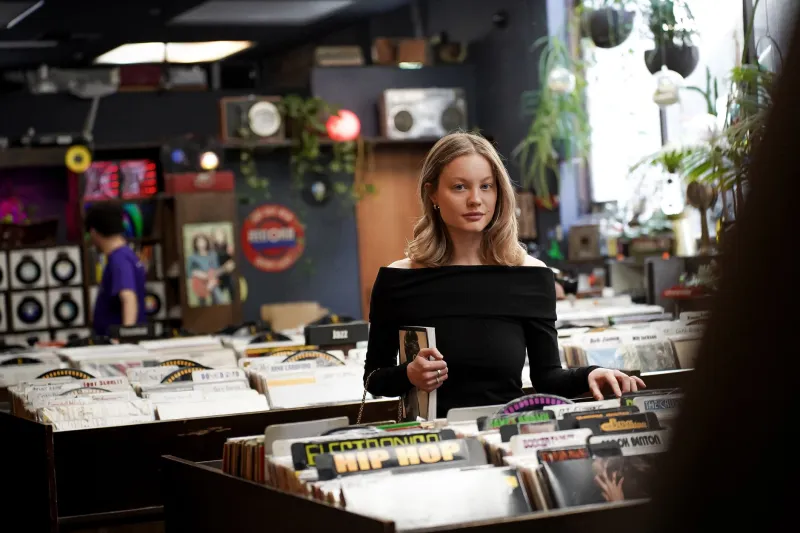
Let's set the scene. It's a Saturday afternoon in 2024. A nineteen-year-old in a thrifted flannel jacket is flipping through a wooden crate at an independent record store in Nashville, her phone tucked away for once. She pulls out a copy of Fleetwood Mac's Rumours, studies the sleeve like it's a treasure map, and carries it to the register without hesitating. This isn't a rare scene anymore — it's practically a weekend ritual for a generation raised entirely on algorithmic playlists and wireless earbuds.
The numbers back it up. According to the RIAA, vinyl record sales in the United States have surpassed CD sales for the past two consecutive years — a milestone that felt unthinkable back when streaming platforms were steamrolling everything in sight. In 2023 alone, Americans bought over 43 million vinyl records. That's not a niche hobby. That's a movement.
And the driving force behind those purchases? Younger listeners. Multiple industry surveys have confirmed that Gen Z — people born roughly between 1997 and 2012 — now account for a significant and growing slice of vinyl buyers. Many of them have never lived in a world without on-demand music. So why are they choosing something so deliberately slow?
The Feel of Real: Why Physical Still Matters
There's a term that keeps coming up in conversations with younger record collectors: intentionality. When you stream a song, it's effortless. You tap a button, and it's there. When you buy a record, you're making a commitment. You pick it out, bring it home, slide the disc from its sleeve, drop the needle, and listen. The whole ritual forces you to be present in a way that a shuffle queue never could.
"It's like the difference between texting someone happy birthday and actually mailing them a card," says Marcus Webb, 24, who runs a small vinyl resale operation out of his apartment in Austin. "One takes two seconds. The other means something."
Beyond the ritual, there's the physical object itself. Album artwork that spans a twelve-inch sleeve hits different than a tiny thumbnail on your phone screen. Liner notes you can actually read. A gatefold you can open up and spend ten minutes exploring. For a generation that consumes most of its media on screens, holding something real and analog carries a genuine novelty — and for many, that novelty has deepened into genuine passion.
Sound quality debates are part of the conversation too, though they tend to get complicated fast. Audiophiles will argue all day about whether vinyl truly sounds "better" than lossless digital formats, and honestly, the science is mixed. But what's undeniable is that vinyl sounds different — warmer, rounder, with that subtle analog texture that digital compression strips away. Whether that's objectively superior or just aesthetically distinct, it resonates with listeners who've spent their whole lives surrounded by pristine, perfectly edited audio.
The Corner Store Comeback
Independent record stores, many of which barely survived the digital transition of the 2000s, are now experiencing something close to a second golden age. Record Store Day — the annual celebration held every April at indie shops across the country — has grown into a genuine cultural event, with lines forming outside storefronts hours before opening and limited-edition pressings selling out before noon.
Shop owners who weathered the lean years are equal parts grateful and amazed. "I kept the lights on selling used CDs and old concert posters for a long time," admits Diane Kowalski, who's owned Platter House in Cleveland for nearly twenty years. "Now I've got college kids coming in every single weekend. They're not just buying records — they're asking questions, wanting to learn. It's like watching someone fall in love with something for the first time."
Artists have caught on too. Independent musicians in particular have embraced vinyl releases as both a revenue stream and a statement of intent. A limited pressing of a debut album signals seriousness, craftsmanship, and a connection to music history that a digital-only release simply can't replicate. Bigger names — Taylor Swift, Billie Eilish, Tyler the Creator — have leaned into elaborate vinyl packaging as a way of deepening fan engagement in an era when streaming pays fractions of a cent per play.
Nostalgia Without the Memory
Here's the part that really gets us at Royce 59: most of the young people buying vinyl today have no personal memory of it being the dominant format. They weren't there for the golden era of record stores, didn't grow up watching their parents drop a needle on a Sunday morning. Their nostalgia is borrowed — inherited from cultural memory, from old photographs, from the aesthetic language of an era they never lived through.
And yet it feels completely authentic to them. Maybe that's the real magic of the golden era — it doesn't require firsthand experience to cast its spell. The warmth, the slowness, the tactile satisfaction of a well-made record: these things speak across generational lines because they tap into something deeper than memory. They tap into the human desire for things that feel made with care.
The vinyl renaissance isn't just a trend. It's a correction — a generation pushing back against the disposability of digital culture and choosing, deliberately and enthusiastically, to slow down. At Royce 59, that's a story we'll never get tired of telling.