Still Typing: The Quiet Craftspeople Bringing Dead Machines Back to Life
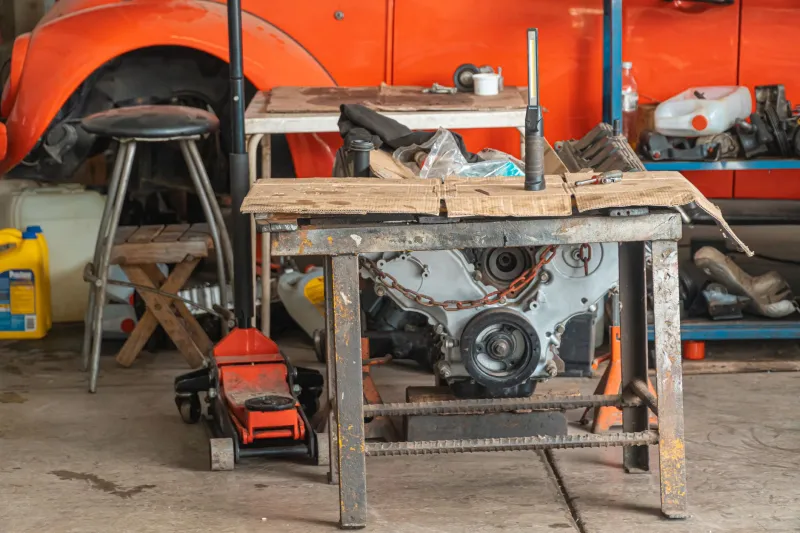
There's a shop in Denver — no sign out front, just a hand-lettered card in the window — where a man named Gerald spends his days with his hands inside machines that most people assume belong in a museum. Ribbons, platens, typebars, escapement mechanisms. The vocabulary alone sounds like it belongs to another century. Because it does. Gerald learned typewriter repair from his uncle in the mid-1980s, right around the time the rest of the world was deciding the whole skill set was obsolete. Forty years later, he's booked out six weeks.
That's the typewriter repair business in 2025. Somehow, impossibly, it's having a moment.
The Machines That Refused to Die
Walk into any serious repair shop and the first thing you notice is the inventory. Olivetti Lettera 32s stacked three deep. Royal Quiet De Luxes with their original cases. Underwood No. 5s that look like they've survived two world wars — because some of them have. These aren't collector curiosities gathering dust in the corner. They're in rotation. People bring them in broken and take them home fixed, then actually use them.
The repair shops themselves are usually small, usually independent, and usually run by people who'll tell you they never expected to still be doing this. In Portland, a woman named Diane took over her father's shop in 2009 and spent the first few years wondering if she'd made a terrible mistake. Then something shifted. "Around 2015 or so, younger people started walking in," she says. "College students mostly. Then writers. Then people who just said they were tired of staring at a screen all day and wanted something real to push back against."
That phrase — something real to push back against — comes up a lot in these conversations.
What a Typewriter Actually Demands
Here's what nobody tells you about writing on a typewriter: it requires commitment. You can't select all and delete. You can't move a paragraph around by dragging it. Every keystroke is a small, semi-permanent decision, and the machine registers that decision with a satisfying, irreversible clack that a laptop keyboard can only approximate. Writers who've switched — or switched back — describe it as clarifying. Intimidating at first, then liberating.
There's also the physical reality of the object. A well-maintained Hermes 3000 weighs about eight pounds and feels like it could survive a fall down a flight of stairs. Your iPhone weighs six ounces and won't survive a fall off your nightstand. That difference in material presence changes how you relate to a tool. You treat a typewriter like equipment. You treat a phone like a habit.
Repair technicians understand this relationship better than almost anyone. They see what happens when a machine breaks and the owner brings it in looking genuinely distressed. "People get attached," says Marcus, who runs a one-man operation out of a converted garage in Nashville. "They'll come in with a typewriter that belonged to their grandfather, or one they found at an estate sale fifteen years ago and have been writing on ever since. They're not replacing it. They want it fixed. That's a different kind of customer than somebody whose laptop died."
The Anatomy of a Repair
A standard typewriter tune-up is more involved than most people expect. Technicians clean decades of dried ink, dust, and eraser debris from the typebars. They replace dried-out rubber components — platens, feed rollers — that have hardened and cracked with age. They adjust the tension on the escapement, which controls how the carriage advances with each keystroke. They test every key, every function, every margin stop. A thorough job on a vintage machine can take several hours.
The parts situation is genuinely complicated. Most typewriter components haven't been manufactured since the 1980s, which means technicians either source from other broken machines, maintain their own inventory of salvaged parts, or — increasingly — have certain pieces fabricated. A small but growing community of machinists has started producing replacement parts on CNC machines and even 3D printers, creating a quiet supply chain that didn't exist a decade ago.
"It's like keeping a classic car on the road," Diane explains. "You get resourceful. You know which machines can donate parts to which other machines. You keep a mental catalog of what you have in the back room. It's a different kind of knowledge than anything you learn in a trade school."
The Planned Obsolescence Problem
There's a reason typewriter repair shops feel like a quiet form of resistance right now. We live in an era of devices designed to be replaced rather than fixed — software updates that slow older hardware, components soldered directly to circuit boards, warranty language that discourages third-party repair. The right-to-repair movement has been fighting this for years, with mixed results.
A typewriter sidesteps the entire argument. There's no firmware. No subscription. No manufacturer deciding when your machine has reached end of life. If a part breaks and you can find someone who knows how to fix it, you fix it. The machine doesn't care how old it is. It just types.
For a certain kind of person — and that person is, statistically, getting younger — that proposition is enormously appealing. Not because they're anti-technology in any wholesale sense, but because they've started to notice the gap between what their devices promise and what they actually deliver. A typewriter promises nothing except that it will put ink on paper when you press a key. It keeps that promise every time.
Where to Find Them
Typewriter repair shops are scattered but findable. California has a handful of well-known operations, including spots in Los Angeles and the Bay Area that have developed real cult followings. New York has a few, though real estate pressure keeps forcing them to relocate. Smaller cities — Asheville, Albuquerque, Madison — often have one or two people working out of home studios who've built steady clientele through word of mouth alone.
The Typewriter Database, a community-maintained online resource, has become a clearinghouse for repair referrals. Forums and Reddit communities dedicated to vintage typewriters are active and genuinely helpful, the kind of internet spaces that remind you what the internet was supposed to be for.
Gerald in Denver says he's not worried about the future of his trade. If anything, he's thinking about finding an apprentice. "I've got maybe fifteen good years left in me doing this work," he says, holding a newly cleaned typebar up to the light. "Somebody needs to learn it before I'm done. There's no shortage of machines out there that need fixing. There never will be."
He sets the typebar back in place, tests the key, listens to the clack. Satisfied, he moves on to the next one.