Roll the Dice, Read the Room: How Board Games Became the New Power Move
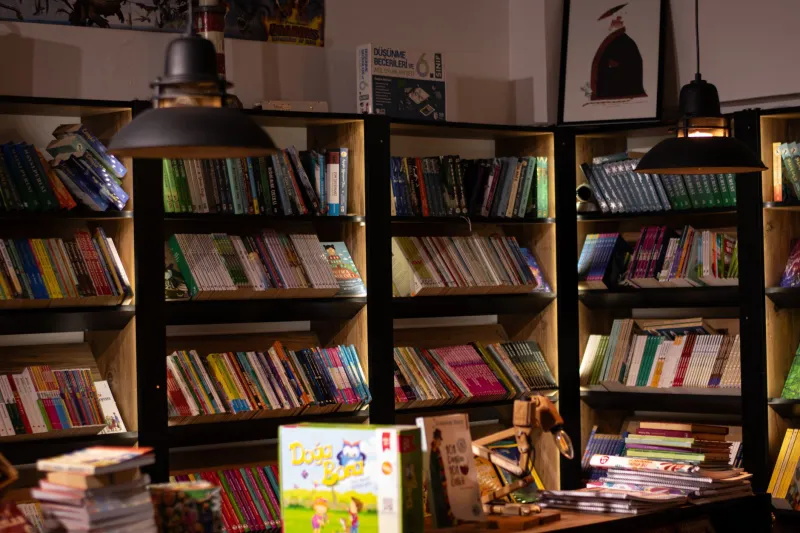
Look closely at the bookshelves in certain homes and you'll notice something. Tucked between the design monographs and the architectural ceramics, there are boxes. Beautifully designed, heavy, deliberately chosen boxes. Not Monopoly. Not Clue. Something with a name like Wingspan or Twilight Imperium or Root — games that look like art objects and play like intellectual endurance tests. Games that cost as much as a decent dinner out and require about as much planning to execute properly.
This is the new status symbol, and it has absolutely nothing to do with the internet.
From Basement Hobby to Dinner Party Centerpiece
Board gaming has been a serious hobby for decades, but its cultural footprint has historically been modest — the province of dedicated enthusiasts, convention-goers, and teenagers with too much weekend to fill. What's changed in the last five to eight years is who's at the table.
Affluent millennials and Gen X professionals — people with demanding careers, complicated social calendars, and the disposable income to be selective about how they spend their leisure hours — have adopted tabletop gaming with a fervor that's surprised even the industry's most optimistic insiders. The global board game market was valued at roughly $13 billion in 2023, and that number is climbing. Specialty game shops in cities like Chicago, Portland, Austin, and Brooklyn report that their customer base has shifted noticeably upward in both age and income.
"Five years ago, my average customer was a college kid or a hardcore hobbyist," says Marcus Webb, who owns a game shop in Denver. "Now I've got lawyers in here on their lunch breaks. Interior designers. People who just got back from Aspen. They want something beautiful to put on their shelf and something genuinely challenging to do on a Saturday night. Sometimes they want both in the same box."
The Craft Behind the Cardboard
Part of what's driving this shift is the remarkable evolution of game design itself. Modern board games — particularly those coming out of European studios and a new generation of American independent designers — are extraordinarily sophisticated objects. The artwork is often commissioned from professional illustrators. The components are laser-cut wood, hand-painted miniatures, linen-finish cards. The rulebooks read like carefully edited essays. The mechanics are designed with the kind of systemic rigor you'd associate with software engineering.
These aren't games that were designed to be sold at a big-box retailer. Many of them are funded through Kickstarter campaigns that raise millions of dollars before a single copy ships. Backers aren't just buying a game; they're investing in an artifact. A thing made with intention, by people who cared about every detail of its construction.
That intentionality reads immediately when you open the box. There's a tactile satisfaction to handling a well-made game — the weight of the pieces, the texture of the cards, the satisfying click of a well-fitted insert — that no digital experience can replicate. You're not just playing. You're handling something that someone made carefully, and that care transfers.
Unpredictability as a Feature
Here's what streaming can't sell you: genuine surprise. Algorithmic entertainment is, by design, calibrated to your existing preferences. It reduces friction, eliminates the unfamiliar, and delivers a smooth, personalized experience that rarely challenges your assumptions or catches you off guard. It's comfortable in a way that, after a while, starts to feel numbing.
A well-designed board game is deliberately, productively unpredictable. The dice roll differently every time. The other players make choices you didn't anticipate. Strategies that worked last game collapse under new circumstances. You have to adapt, negotiate, read the room, recalibrate. You have to actually think.
For people who spend their professional lives navigating complexity and competition, that kind of mental engagement isn't a burden — it's a relief. It's the difference between being entertained and being alive.
"I play a lot of games that involve resource management and long-term planning," says Diane Chu, a financial analyst in San Francisco who hosts a biweekly game night for colleagues and friends. "And honestly, it scratches the same itch as my work, but without the stakes. I get to be strategic and competitive in a space where losing doesn't actually cost me anything. That's a pretty valuable thing to have access to."
The Table as Social Technology
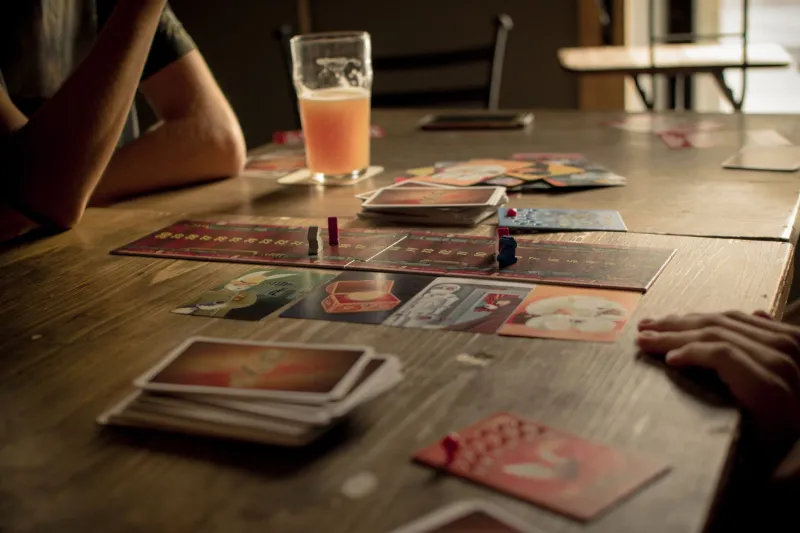
There's a psychology to gathering around a game board that deserves more attention than it usually gets. When people sit down to play together, something changes in the quality of the interaction. The game provides structure — turns, rules, objectives — that removes the ambient social anxiety of unstructured gatherings. Everyone has a role. Everyone has something to do. The conversation that happens around the edges of gameplay is often the most honest, most relaxed conversation those people will have all week.
This is, if you think about it, exactly what parlor games did for the Victorian drawing room. They gave people a shared activity that made being together easier and more pleasurable. The format has updated — the games are far more complex, the cultural context entirely different — but the underlying social function is identical.
"People underestimate how hard it is to actually spend time with someone," says Webb. "Like, really spend time, where you're both present and engaged and not half-watching something. A game solves that problem. It gives you a reason to be in the same room and actually pay attention to each other."
What the Shelf Says About You
Of course, there's also the display element, and it would be dishonest to pretend otherwise. A curated game collection — thoughtfully arranged on a shelf, featuring titles that signal taste and intellectual seriousness — communicates something about its owner. It says: I value craft. I value depth. I choose things that require effort to appreciate.
In a moment when so much of how we signal identity happens through screens and feeds, the physical object asserts itself with unusual authority. You can't curate your way to a beautiful game collection without actually knowing something about games. The knowledge and the object are inseparable. That authenticity is part of what makes it meaningful as a status marker.
Which is, if you squint at it from the right angle, exactly what a well-chosen vinyl collection used to communicate. Or a library of first editions. Or a rack of tailored suits.
Some signals are timeless. They just find new forms.
The Oldest New Trend in the Room
None of this is actually new, of course. People have been gathering around tables to play games of skill and chance for as long as there have been tables. What's new is the cultural rediscovery of that ritual by people who had other options and chose this one anyway.
That choice is the statement. In a world that makes passive consumption extraordinarily easy, opting for something that requires your attention, your skill, your presence — and the presence of people you actually want to spend time with — is a quiet act of resistance.
Roll the dice. Read the room. That's always been the move.