Keep It Forever: The People Who Are Saving the Physical World One Object at a Time
Somewhere in a converted garage in Albuquerque, a woman named Delia is carefully re-pinning a collection of mid-century moth specimens she bought at an estate sale. Each one gets a new label, typed on an old Olympia typewriter, with the species name and the year it was collected. She doesn't sell them. She doesn't post them for likes. She just keeps them, arranged in a shadow box, because she believes certain things deserve to be held onto.
Delia is not unusual anymore. She's part of something.
The Disposable Age Hits a Wall
We built an entire civilization around impermanence and then seemed genuinely surprised when people started feeling untethered. Digital content is designed to be consumed and replaced. Streaming libraries appear and vanish. Photographs live in the cloud until they don't. Even the act of buying music has been replaced by renting access to it — a subscription that evaporates the moment you stop paying.
For a while, this felt like progress. Lighter. Freer. No clutter.
Then something flipped. People started buying vinyl records in numbers that haven't been seen since the early '80s. Film photography came back with a vengeance among photographers who could easily afford digital. Antique markets started drawing crowds that skewed surprisingly young. And taxidermy — once the exclusive territory of hunting lodges and natural history museums — began appearing in Brooklyn apartments and Austin coffee shops and the carefully arranged bookshelves of people who had very much never shot anything.
This isn't nostalgia for nostalgia's sake. It's a statement about what lasts and what doesn't.
The Weight of a Real Thing
There's a cognitive difference between owning something and accessing something, and researchers have been quietly documenting it for years. Physical objects carry what psychologists call "endowment value" — we assign them more meaning precisely because they're ours, because they take up space, because they can be touched.
A digital photo of your grandmother exists in a server farm somewhere in Nevada. A printed photograph of your grandmother, kept in a box, handled enough times that the edges have softened — that's a different kind of thing entirely. One is data. The other is a relic.
The people leading this analog artifact movement understand that distinction intuitively, even if they don't always articulate it in those terms. They're not anti-technology, exactly. They're pro-weight. Pro-texture. Pro-the-specific-smell-of-old-paper.
"I can't mourn a hard drive," says a film archivist based in Los Angeles who spends his weekends rescuing 16mm prints from estate sales. "But I can hold a reel of film and feel the time inside it."
Taxidermy and the Art of Honest Preservation
Nothing makes people more uncomfortable — or more fascinated — than taxidermy. Which is probably why it's become such a potent symbol for this particular cultural moment.
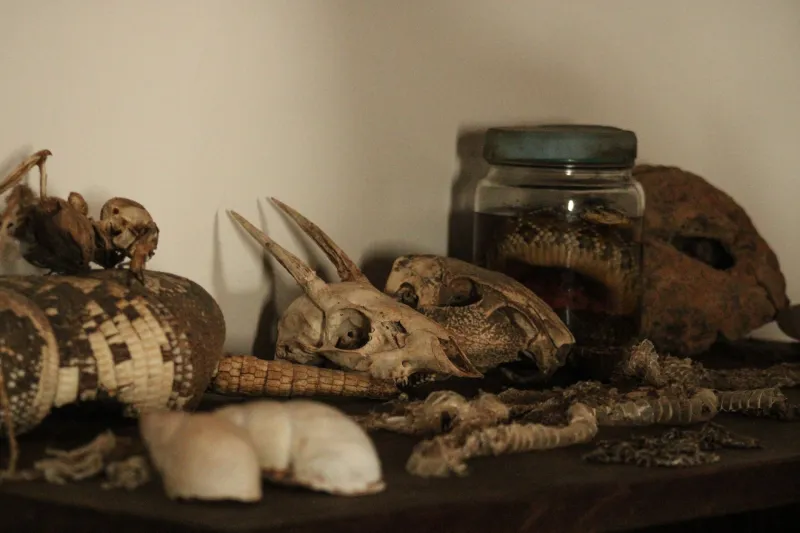
A well-executed taxidermy piece is the most literal possible argument for preservation. It takes the fact of death and refuses to let it be the end of the story. It says: this creature existed, it had form and texture and specific color, and we are going to honor that by keeping it present.
The rogue taxidermy movement — artists who combine traditional preservation techniques with surrealist or fantastical aesthetics — has been building for years, with figures like Minnesota's Sarina Brewer turning the craft into fine art. But even traditional taxidermy has found a new audience among collectors who see it less as decoration and more as a philosophical position.
You are keeping something. You are saying it mattered enough to last.
Wax Museums and the Uncanny Urge to Freeze Time
The wax museum has always been a little strange, and that's exactly the point. Madame Tussauds built an empire on the human desire to stand next to a perfect physical replica of someone famous — to be in the same room, in a sense, with someone otherwise unreachable.
What's interesting is that even as digital technology makes it possible to generate photorealistic avatars and deepfake any face in history, the wax museum hasn't faded. If anything, it's expanded. Because the figure in front of you is there. It has dimension. You can walk around it. The fact that it's slightly uncanny is part of the point — it's the gap between the real and the preserved, and standing in that gap is genuinely interesting.
The same logic applies to natural history museums, which are experiencing a quiet renaissance of their own. Dioramas — those elaborate, frozen scenes of animals in painted landscapes — were considered outdated for decades. Now they're being celebrated as masterworks of craft and intention. The Field Museum in Chicago, the American Museum of Natural History in New York — their older exhibits, the ones built by hand over months, are drawing visitors who come specifically to see what it looks like when human beings decide something is worth preserving with that much care.
The Archive as Identity
What you keep says who you are. And increasingly, people are building identities around their collections — not as status symbols, but as personal archives of meaning.
Vinyl collectors aren't just buying music. They're building a physical record of what mattered to them, organized in a way that reflects their taste and history. Film photographers are producing objects — actual prints — that exist independently of any platform or server. People who collect vintage clothing aren't just making a fashion statement; they're wearing evidence that certain things were made to last.
This is a quiet rebellion against the idea that everything is temporary, replaceable, and upgradeable. Some things should be kept. Some things should be heavy. Some things should require care.
Delia, back in her Albuquerque garage, finishes labeling the last moth. She closes the shadow box and holds it up to the light. The specimens are maybe seventy years old. They'll outlast her, probably. That's the whole idea.
In a world that moves fast and forgets faster, keeping something is a radical act. And more people are doing it every day.