Shelf Life: How the Corner Bookstore Quietly Became the Soul of the Neighborhood
Somebody forgot to tell the independent bookstore it was supposed to die.
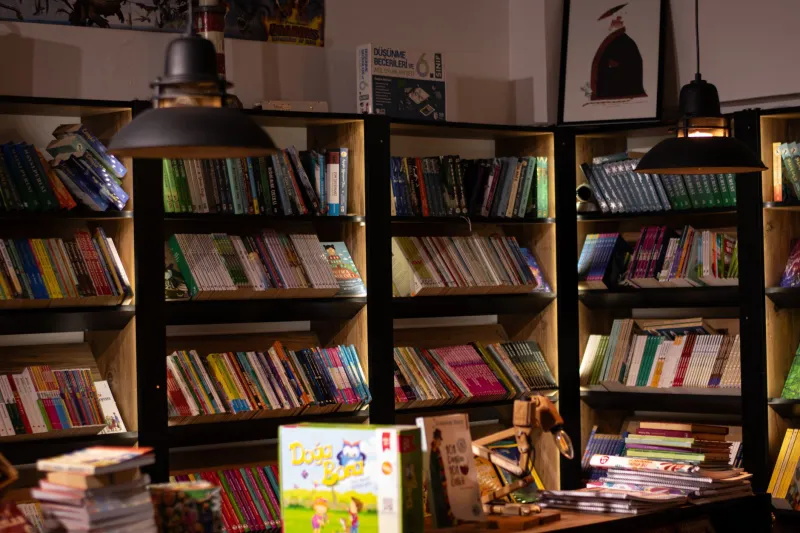
For about two decades, the obituaries were already written. Amazon was going to eat it. Barnes & Noble was going to swallow the scraps. Then the e-reader was going to torch whatever was left. And yet, on a random Wednesday in Portland or Nashville or Tucson, you'll find a line out the door of some 800-square-foot shop that smells like old paper and coffee, where a hand-lettered chalkboard sign announces a reading by a debut novelist you've never heard of — and every seat is taken.
Something shifted. And it wasn't just about books.
The Algorithm Has No Taste
Here's what nobody talks about when they celebrate the convenience of online shopping: recommendations based on what you already bought aren't recommendations at all. They're mirrors. You get back a version of yourself you already know.
Walk into a well-curated independent bookstore and the experience is genuinely different. There's a hand-written card tucked into a novel about grief in rural Montana — written by a bookseller who lost her dad last spring and wants you to know this one matters. There's a small table near the window labeled "Books That Will Make You Uncomfortable (In the Good Way)." No algorithm built that table. A human being did, with opinions and history and something at stake.
That's the thing people are chasing. Not just the book, but the recommendation that comes with a face attached to it.
"We're not selling products," says the owner of a beloved Chicago indie that's been running for over thirty years. "We're selling conversations that start before you even open the cover."
The Third Place, Reimagined
Sociologist Ray Oldenburg coined the term "third place" back in the '80s — that neutral ground between home and work where community actually forms. Bars, barbershops, diners. Spaces where nobody's selling you anything and the only agenda is showing up.
The independent bookstore has quietly inserted itself into that lineage. And it fits better than you might expect.
Places like The Raven Book Store in Lawrence, Kansas, or Loyalty Books in Washington D.C. aren't just retail operations. They're hosting book clubs that double as grief support. They're running teen writing workshops on Saturday mornings. They're the place where the regulars know each other's names and argue about whether Cormac McCarthy's later work holds up (it does, obviously).
There's a reason these spaces feel different from a coffee shop, even a good one. Coffee shops ask you to be productive. Bookstores give you permission to be slow. To browse without purpose. To pick up something you didn't know you needed and stand in the aisle reading the first three pages until you realize you've been there for twenty minutes.
That's not inefficiency. That's exactly what people are starving for.
Curation as a Political Act
What a bookstore chooses to carry says something. What it puts face-out on the new releases table, what it stocks in the local authors section, what it refuses to carry — all of it is a statement.
In an era when the internet technically gives you access to every book ever published, the act of choosing has become radical. Independent booksellers are essentially saying: not everything deserves equal shelf space. We've thought about this. Trust us.
And increasingly, people do.
The American Booksellers Association reported that indie bookstore numbers have been climbing steadily since the early 2010s, with membership growing from around 1,400 stores to over 2,500 by the mid-2020s. That's not a fluke. That's a cultural correction.
Part of what's driving it is a generational thing. Younger readers — the ones who grew up entirely online — are specifically seeking out experiences that feel deliberate. Physical. Irreplaceable. A signed first edition from a local author means something that a digital download simply cannot replicate, no matter how convenient.
The Event Is the Point
Talk to any indie bookseller about what changed their business model, and they'll mention events. Author readings, yes, but also trivia nights, zine fairs, literary speed dating, cookbook demos, record swaps that somehow turned into a conversation about a novel.
The bookstore as venue is maybe the smartest reinvention in retail over the last decade. Because the event brings in people who might never have walked in otherwise. And once they're there, surrounded by shelves and the particular energy of a room full of readers, something happens. They buy a book. They come back. They bring a friend.
Politics & Prose in Washington D.C. has been doing this for years, hosting hundreds of events annually and building something that feels less like a bookstore and more like a civic institution. Book People in Austin, Texas operates similarly — part bookstore, part cultural anchor, part community living room.
These aren't outliers. They're the model.
What Gets Preserved When You Walk In
There's something else happening in these spaces that's harder to name but easy to feel. Walking into a good independent bookstore is an act of opting out. Out of the scroll. Out of the notification. Out of the relentless pace of content that arrives whether you asked for it or not.
The books on the shelf have been there for a while. They'll be there next week. Nobody's going to delete them or change the algorithm and make them disappear. That permanence is its own kind of comfort.
In a culture obsessed with what's next, the bookstore quietly insists that some things are worth sitting with. That a novel published in 1962 might be exactly what you need right now. That the bookseller who's been working the Saturday shift for eleven years probably knows something worth listening to.
The golden era of the independent bookstore wasn't the past. It might be right now — messy, hand-lettered, slightly overstocked, and more alive than anyone predicted.