Stack It, Style It, Mean It: How the Coffee Table Book Became America's Favorite Art Object
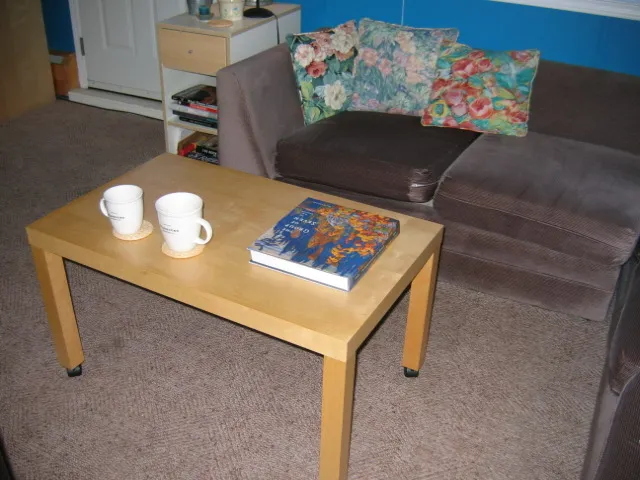
Photo: Trevor MacInnis at English Wikipedia, CC BY-SA 3.0, via Wikimedia Commons
At some point in the last few years, the coffee table book stopped being a joke. You know the joke — the dusty monograph on Ansel Adams that your aunt received as a gift in 1987 and never once opened, sitting under a bowl of decorative gourds. The book as prop. The book as filler. The book that exists to prove you have a coffee table.
That version still exists, of course. But something else is happening alongside it, something more considered and more interesting. A growing number of Americans are treating their printed books — specifically the large-format, beautifully designed, premium-printed kind — as genuine objects of art. They're curating them. Stacking them with intention. Lending them out the way you'd lend out a record you love. And the publishing industry, after years of telling itself that print was dying, is paying close attention.
The Object in the Age of the Screen
To understand why the coffee table book is having a genuine cultural moment, you have to start with what it isn't. It isn't scrollable. It isn't backlit. It doesn't send you notifications or remember where you left off or suggest other content you might enjoy based on your viewing history.
In 2024, those absences are selling points.
The tactile experience of a well-made book — the weight of it, the texture of the paper, the way a full-bleed photograph bleeds off the edge of a page — is something that cannot be replicated on any screen at any resolution. Publishers who understand this are investing heavily in print quality: heavier stocks, sewn bindings, cloth covers, uncoated papers that make photographs feel almost three-dimensional. The book as an object worth owning, not just reading.
This is, in some ways, the same instinct that brought vinyl back. The format itself becomes part of the experience. The medium carries meaning.
What People Are Actually Buying
The titles that have broken through recently tell you something about where American taste is right now. Architecture monographs are perennially strong — books on mid-century modernism, on brutalism, on the residential work of designers who built California in the fifties and sixties. Fashion photography remains a reliable category, particularly retrospectives that treat the genre as fine art rather than commerce.
But the more interesting growth is happening in unexpected corners. Books on craft and making — ceramics, woodworking, textile design — are finding audiences that would have surprised publishers five years ago. Books on subcultures: skateboarding, lowrider culture, the history of American diners, the visual world of jazz clubs. Books that document something specific and finite and irreplaceable.
What these titles share is a sense of occasion. They're not reference books. They're not novels you carry on the subway. They're objects you sit down with, in good light, and give your full attention. Which, again, is the point.
The Stack as Self-Portrait
Interior designers have been saying for years that books tell you more about a person than almost any other object in their home. The specific titles matter less than the overall picture: how many books, how they're organized (or not), whether they look read, what subjects recur.
With coffee table books, this self-portrait function is amplified because the books are so visible. They're not on a shelf in a back room. They're on the table in the middle of the space where you receive people. Every guest who sits down in your living room sees them. Every person who shows up for dinner notices what's in the stack.
This has made coffee table book curation a surprisingly deliberate act. People talk about the books they display the way they talk about the art on their walls — with awareness that these objects are communicating something about who they are and what they value. A stack that includes a Basquiat retrospective, a book on Japanese architecture, and a deep-dive on the history of American barbershops is saying something specific. So is a stack that leads with a Williams Sonoma cookbook and a Hamptons real estate photography book. Neither is wrong. Both are intentional.
The Taste-Making Titles of Right Now
A few specific books keep appearing in conversations about what's defining the current moment. Anything from the publisher Taschen continues to carry weight — their oversized editions on Helmut Newton, Stanley Kubrick, and mid-century design have become something close to benchmarks for the category. Rizzoli's backlist of architecture and fashion titles moves steadily.
But some of the most talked-about books right now are coming from smaller publishers and imprints willing to take risks on niche subjects with serious production values. Books on specific neighborhoods, specific decades, specific subcultures. Limited-run titles that feel genuinely rare. The scarcity adds to the object's meaning — this isn't something you can stream. It exists in a finite number of copies, and you have one.
Beyond Decoration
It would be easy to be cynical about all of this. The coffee table book as status symbol isn't a new idea, and there's plenty of room to roll your eyes at the performative quality of a carefully styled book stack.
But there's something genuine underneath the aesthetics. In a culture that has moved enormous amounts of its visual experience onto screens — where photographs are consumed by the thousands every day and almost nothing is printed — the act of putting a physical image in front of someone, on paper, at a scale where it can actually be seen, feels like a statement worth making.
The best coffee table books aren't decorations. They're arguments. This image matters enough to print at this size on this paper and put it in your home permanently. Come look at it. Really look.
That's not a small thing. In 2024, that might actually be radical.