The Pen on the Desk: How a Quiet Obsession With Ink Became the Status Signal No One Saw Coming
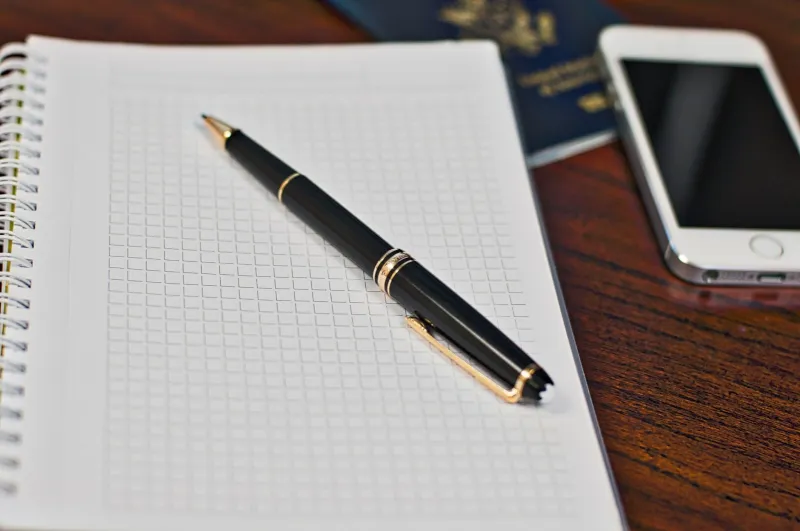
The conference room was full of laptops. Keyboards clicking, notifications buzzing, someone's screen sharing something nobody was actually looking at. And then there was James — calm, unhurried, uncapping a matte black fountain pen and pulling a slim notebook toward him like he had all the time in the world.
People noticed. They always notice.
"I've had more conversations started by my pen than by anything I've ever posted online," says James W., a 44-year-old attorney in Dallas who started collecting writing instruments about six years ago and now owns somewhere north of forty pens, ranging from a workhorse Lamy Safari to a hand-turned Japanese Nakaya that costs more than some people's laptops. "It's not about showing off. It's about choosing a different relationship with the act of writing."
That relationship — tactile, deliberate, slightly inconvenient in all the best ways — is at the heart of a cultural moment that nobody really predicted.
The Frictionless World Has a Problem
For the past decade and a half, technology promised us efficiency. Everything faster, smoother, more seamless. Type faster, send faster, forget faster. The friction of analog life was something to be engineered away.
And then, somewhere around the early 2020s, a growing number of people started to wonder if friction was actually the point.
The premium pen market — fountain pens, high-end rollerballs, precision mechanical pencils — has been quietly booming. Retailers like Goulet Pens in Virginia have built loyal national audiences on the back of what looks, from the outside, like an extremely niche hobby. The reality is something more interesting: a community of people across age groups, professions, and income levels who've decided that the act of writing deserves to be felt.
Fountain pen forums on Reddit boast hundreds of thousands of members. Pen shows — actual conventions where people gather to buy, trade, and talk about writing instruments — have been selling out in cities from Los Angeles to Chicago. The aesthetic of the well-appointed desk, anchor pen front and center, has become its own corner of the internet.
What Makes a Pen Worth the Money
To an outsider, spending two hundred dollars on a pen seems absurd. To a collector, spending two hundred dollars on a pen that will last thirty years, write more smoothly than anything you've ever held, and bring a small but genuine pleasure to every note you take — that's called a reasonable investment.
The sensory experience of a quality writing instrument is genuinely difficult to explain to someone who hasn't tried one. A well-tuned fountain pen doesn't drag or scratch; it glides. The nib — the metal tip that actually touches the paper — flexes slightly under pressure, giving the line a subtle variation that ballpoints can't replicate. And the ink. The ink is a whole other rabbit hole.
Bottled fountain pen inks now come in hundreds of colors with names that border on poetry: Diamine's "Autumn Oak," Pilot's "Iroshizuku Tsuki-yo" (a deep teal named for moonlit nights), Sailor's "Waka-uguisu," a green so precise it looks like someone bottled spring. Collectors mix inks, chase limited editions, debate the relative shading properties of different formulations on different paper stocks.
It is, objectively, a little obsessive. That's also part of the appeal.
The Communities Forming Around the Nib
Like most analog revivals, premium pen culture has built its richest life in community. Pen clubs — some formal, some just a group of people who meet at a coffee shop once a month — exist in most major American cities. The vibe is less competitive collector culture and more shared enthusiasm: people trading ink samples, comparing notebooks, passing pens around the table for everyone to try.
Sophia M., a 31-year-old graphic designer in Brooklyn who got into fountain pens during a particularly screen-heavy stretch of the pandemic, describes her local pen club as "the most unexpectedly warm group of people I've ever been part of."
"It cuts across everything," she says. "There are retired engineers and college students and people who work in finance and people who teach elementary school. The pen is just the thing that got everyone in the room together."
Online, the community is equally generous. Subreddits dedicated to fountain pens run regular "ink swaps" where members mail each other small samples of their collections. YouTube channels dedicated to pen reviews have racked up millions of views. The hashtag culture around "penspiration" — desk setups, ink swatches, handwritten notes photographed against beautiful paper — has carved out a distinct aesthetic corner of Instagram that feels, refreshingly, like it has nothing to sell you.
Writing as a Statement
There's an argument to be made — and plenty of collectors make it — that choosing to write by hand in a digital-first world is a quiet act of resistance. Not loud, not performative, not trying to make anyone feel bad about their keyboard. Just a private, daily decision to slow down and feel the thing you're doing.
"When I write something by hand, I remember it differently," says James, back in Dallas, capping his pen after signing something that probably mattered. "And I think about it differently before I write it. You can't just delete a sentence you've already put on paper. You have to mean it a little more."
That's the real luxury here — not the price tag on the pen, but the quality of attention it demands. In a world that's spent years trying to make thinking as fast and frictionless as possible, there's something quietly radical about choosing a tool that asks you to slow down.
The pen on the desk isn't showing off. It's making a point.