Shaken, Stirred, and Deeply Intentional: How the Golden Age of the Cocktail Never Really Left Us
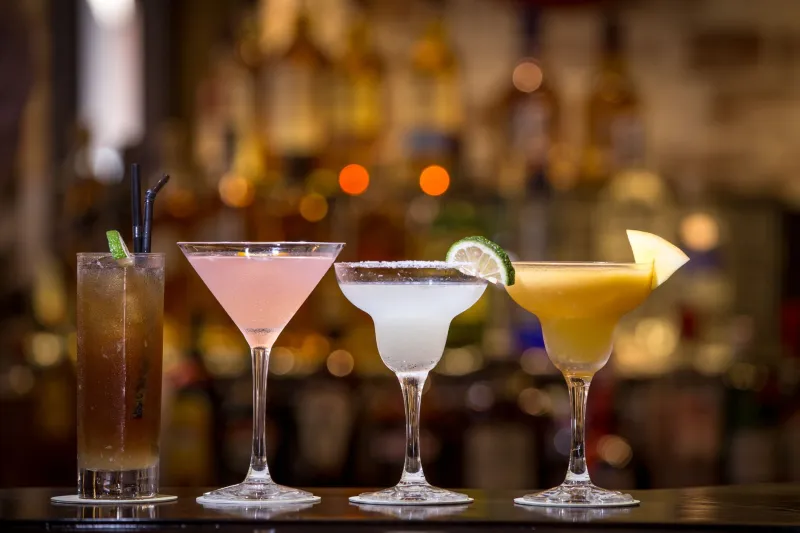
There's a moment — you've probably felt it — when the bartender sets a coupe glass down in front of you with just a little too much care. The drink is cold, the rim is clean, maybe there's a twist of lemon peel resting on the lip like a comma at the end of a sentence. You don't reach for it right away. You look at it first. That pause? That's not accidental. That's a hundred years of American drinking culture doing exactly what it was designed to do.
The cocktail hour was never just about alcohol. It was about architecture — building a moment inside a day that was otherwise too loud, too fast, or too serious. And the fact that we're still chasing that feeling, still filling vintage-inspired bars in cities from Nashville to Portland, says something pretty profound about what we actually want out of a night out.
Prohibition Made It Dangerous. That Made It Irresistible.
Here's the thing about Prohibition that the history books sometimes gloss over: banning something doesn't kill the desire for it. It just makes the desire more interesting. The speakeasy era, roughly 1920 to 1933, didn't eliminate drinking culture in America. It elevated it. Suddenly, having a drink meant knowing someone, saying the right word at the right door, descending into a basement where jazz was playing and the bartender was mixing something that required actual skill.
The cocktail as an art form was partly born out of necessity — early bootleg spirits were rough, and you needed citrus, sugar, and bitters to make them palatable. But the ritual that grew up around that necessity became something much bigger than the drink itself. Getting dressed up, going somewhere secret, ordering something by name — it was performance, rebellion, and community all at once.
When Prohibition ended, Americans didn't abandon the ritual. They moved it upstairs, into hotel bars and supper clubs and eventually the mid-century office culture that gave us the three-martini lunch. That particular institution — two guys in suits, a corner booth, and a round of Gibsons before they even looked at the menu — has been both celebrated and mocked depending on who's telling the story. But strip away the Mad Men mythology and what you find is a generation of people who understood that some conversations required ceremony.
The Manhattan, the Martini, and the Art of Ordering Like You Mean It
Ask any serious bartender and they'll tell you the same thing: the classics reveal everything. A Manhattan is rye whiskey, sweet vermouth, and bitters — three ingredients that, when properly balanced, produce something that feels almost architectural. A proper dry martini is gin (or, fine, vodka, but gin is correct) and vermouth in a ratio that the drinker has strong opinions about. These aren't complicated recipes. They're precise ones. And precision, in a world of sloppy shortcuts, feels like a radical act.
The golden era of cocktail culture — let's say roughly 1935 to 1965 — understood something that the cheap-beer-and-a-shot crowd never quite grasped: the drink was the occasion. You didn't order a Manhattan because you were thirsty. You ordered it because you were somewhere worth being, with someone worth impressing, and you wanted the moment to have weight.
That sensibility never fully disappeared, but it went underground for a while. The 1970s and '80s weren't kind to the craft cocktail. Premixed everything, neon-colored shooters, and the general aesthetic collapse of the disco era pushed serious drinking culture to the margins. Then, somewhere around the early 2000s, a handful of bartenders in New York and San Francisco started reaching back — pulling out vintage recipe books, sourcing forgotten amari, making their own bitters — and the revival was on.
What the Craft Cocktail Renaissance Is Actually Selling
Walk into any serious cocktail bar in America right now and pay attention to what's on the walls. Old photographs. Exposed brick. Edison bulbs. Bartenders in vests. Menus printed on heavy cardstock with ink that smells faintly like a library. These places aren't just selling drinks. They're selling a permission slip.
Permission to slow down. Permission to sit somewhere for two hours without checking your phone every four minutes. Permission to dress up a little, to care about what's in your glass, to have a conversation that goes somewhere. In a culture that has optimized everything for speed and convenience, the cocktail bar that makes you wait for a properly stirred Negroni is doing something genuinely countercultural.
The numbers back this up. The American craft spirits industry has grown dramatically over the past decade, with small-batch distilleries popping up in every state. Cocktail competition culture — events like the Tales of the Cocktail conference in New Orleans — draws thousands of industry professionals who treat bartending with the same seriousness that chefs bring to the kitchen. And consumers are paying attention, ordering drinks by the name of the bartender who invented them, asking about the provenance of the vermouth.
This is nostalgia, yes. But it's not passive nostalgia — not the sad kind where you just wish things were different. It's active. It's people consciously reconstructing something they sensed was missing, using the tools of the present to rebuild the feeling of the past.
The Ritual Is the Point
Here's what the golden era understood that we're relearning: the ritual surrounding a drink matters as much as the drink itself. The way a good bartender makes eye contact when they set the glass down. The specific sound of ice being cracked, not just dumped. The moment before the first sip when you're still just looking at something beautiful.
These aren't frivolous details. They're the whole architecture of the experience. Mid-century Americans — at least the ones who could access this culture — built entire social lives around these rituals. The cocktail hour before dinner. The nightcap after the show. The Sunday afternoon drink with the newspaper. Each one was a small ceremony, a way of marking time as meaningful.
We live in an era of remarkable convenience and remarkable hollowness. You can have almost anything delivered to your door in under an hour. What you can't have delivered is the feeling of being somewhere on purpose, dressed for it, with a drink in your hand that someone made specifically for you.
That's what the best cocktail bars in America are offering right now. Not just booze. Not just ambiance. A way back into a version of adult life that felt considered, intentional, and — here's the word nobody uses anymore — civilized.
So the next time someone hands you a properly made Old Fashioned and you feel that little pause before you reach for it, don't rush past it. That pause is the whole point. It always was.