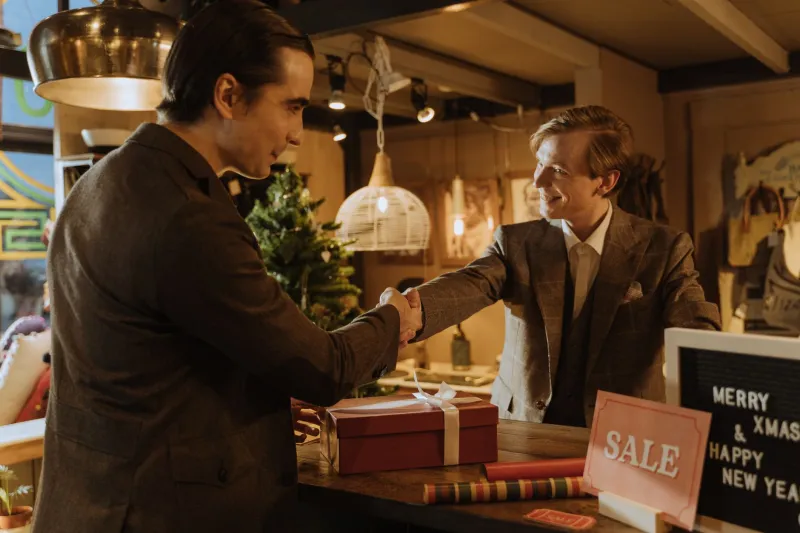
Palm to Palm: The Handshake's Stubborn Grip on the Human Soul
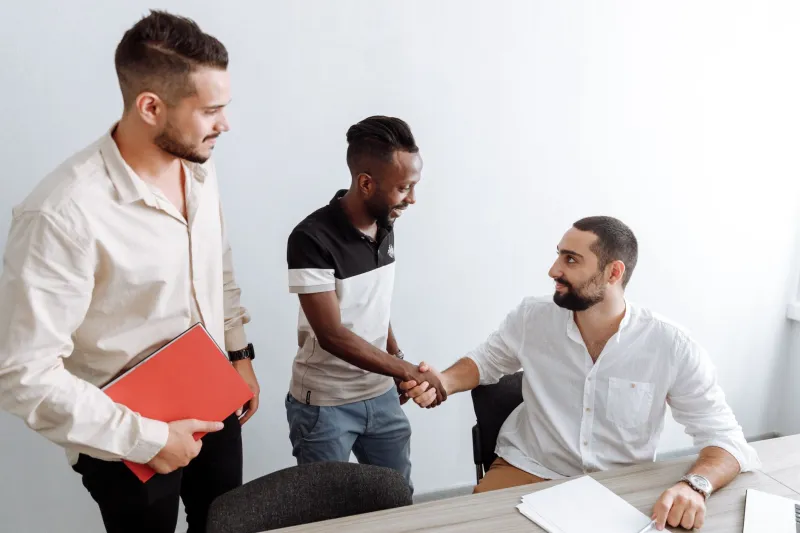
There's a moment — you've probably felt it — when a handshake tells you everything a résumé won't. The grip, the timing, the eye contact that either lands or drifts. In about two seconds, something real passes between two people. No algorithm captures it. No notification replicates it. And no matter how many collaboration platforms we stack on top of each other, that two-second exchange still does work that nothing else can.
We live in an age that has quietly declared war on physical contact. Pandemic protocols accelerated something that was already creeping in — the slow substitution of presence with convenience. We wave at cameras. We send GIFs. We "react" to news that would have once demanded a phone call, or better yet, a visit. And somewhere in all that frictionless communication, we've lost the texture of actually meaning something.
The handshake refuses to go quietly.
Where It Came From and Why It Stuck
The gesture itself is old — genuinely old. Historians trace formal handshaking back to ancient Greece, where it signaled peace between parties who might otherwise be reaching for a weapon. The open hand, extended and grasped, was proof: I'm not holding anything. Neither are you. We can talk.
By the time it migrated into Western business culture and American civic life, the handshake had accumulated centuries of meaning. Quakers adopted it as a democratic alternative to the class-coded bow. Frontier America leaned on it as a binding contract when paperwork wasn't available and lawyers were three days' ride away. Your word, sealed with a grip, was legally and morally sufficient.
Mid-century America — the era this site was practically built around — elevated the handshake into something close to an art form. Watch any footage from the '50s and early '60s: politicians, executives, athletes, musicians stepping off planes. The handshake wasn't perfunctory. It was deliberate. It was performed, in the best sense of that word. People understood that how you extended your hand said something about who you were.
What Your Hand Actually Says
Psychologists who study nonverbal communication have spent decades trying to quantify what most people already sense intuitively. A firm, sustained handshake correlates with perceived confidence, trustworthiness, and emotional openness. A limp one registers as disinterest or evasion. A grip held a beat too long reads as dominance or aggression. The variables are subtle, but the read is almost instantaneous.
What's fascinating is that this isn't purely cultural conditioning — it's neurological. Physical touch triggers oxytocin release, the same bonding chemistry involved in human attachment. When you shake someone's hand, your nervous system is literally processing them as real. Not an avatar. Not a username. A person with weight and warmth and intention.
That's why the handshake remains so stubbornly relevant in high-stakes situations. Job interviews. Business deals. Peace negotiations. The moments where we most need to know whether someone means what they're saying — those are exactly the moments where we reach for each other's hands.
The Digital Gap Nobody Wants to Admit
Here's the uncomfortable truth about virtual communication: it's extraordinarily easy to be dishonest in it. Not necessarily in what you say, but in what you withhold. You can craft a message, delete it, rewrite it, emoji it into something warmer than you actually feel. You can smile on camera while your body language below the frame says something entirely different. Distance creates performance space, and performance space creates room for inauthenticity.
A handshake doesn't give you that room. You're either present or you're not. The grip is either genuine or it isn't. There's a reason that "a firm handshake" remains shorthand in American culture for trustworthiness — it's one of the few gestures left that's genuinely difficult to fake without the other person noticing.
This is especially true in business, where the erosion of in-person interaction has produced a strange new anxiety. Deals that once felt solid after a meeting now feel provisional, conditional, subject to revision via email. Something got lost when we moved negotiations entirely onto screens. Experienced dealmakers will tell you — quietly, because it sounds almost sentimental — that they trust a handshake more than a DocuSign.
Romance, Friendship, and the Forgotten Warmth of the First Touch
Outside of professional life, the handshake plays a different but equally important role. In romance, it's often the first sanctioned physical contact between two people — that initial meeting where the electricity either crackles or it doesn't. Plenty of relationships have been decided in that moment before a single word of real conversation happened.
In friendship, the handshake evolves. It becomes the dap, the shoulder-clasp, the elaborate greeting ritual between two people who've known each other long enough to develop their own language. Watch a group of old friends reunite sometime. The handshake doesn't disappear — it transforms into something more personal, more coded, more specific to those two people. That evolution is its own kind of intimacy.
What's lost when we remove touch from these equations isn't just warmth. It's information. We are wired to gather data through physical contact in ways that language and visual cues simply don't cover. The handshake is part of that sensory vocabulary, and pretending we can communicate just as fully without it is a little like claiming you can experience music just as well with the volume off.
Keeping the Ritual Alive
None of this is an argument against technology or a nostalgic demand that we return to some imagined simpler time. It's something more practical than that. The handshake matters because human beings matter — because the effort of showing up, of extending your hand, of making contact, signals something that convenience culture struggles to replicate: I see you. I'm here. This is real.
In a golden era that Royce 59 keeps returning to, people understood that some gestures carried weight precisely because they cost something. A handshake costs you nothing except presence. And presence, it turns out, is the rarest currency we have.
So the next time you're tempted to close a deal with a text, or greet someone new with a wave at a camera, consider what you're leaving on the table. Not just warmth — though there's that. But honesty. Accountability. The particular kind of trust that only passes between two people when their hands meet and neither one flinches.
That's not nostalgia. That's just how we were built.