Lunch First, LinkedIn Never: The Quiet Return of the Room Where Deals Get Done
There's a particular kind of confidence that comes from sliding into a booth across from someone and just talking. No connection requests pending approval. No carefully curated headline beneath your name. Just two people, a plate of something good, and the unscripted business of figuring out whether you actually like each other.
That confidence used to be the whole game. And quietly, stubbornly, it's coming back.
The Algorithm Promised a Lot
Let's be honest about what digital networking sold us. The pitch was elegant: cast a wider net, reach people you'd never bump into naturally, build a professional identity that worked while you slept. And for a while, it felt like a revolution. Your LinkedIn connections climbed. Your follower count meant something. You optimized your profile the way a previous generation polished their shoes before a big meeting.
But somewhere in the scroll, something got lost. The metrics started feeling hollow. You'd exchange a dozen messages with someone and still have no real read on them. Were they sharp? Were they trustworthy? Would they show up when things got complicated? A profile, no matter how well-constructed, can't answer those questions. A lunch can answer all three before the entrées arrive.
The creatives and entrepreneurs quietly abandoning the digital grind aren't Luddites. They're people who tried the algorithm and noticed something missing — the texture of an actual human being.
What the Mid-Century Guys Already Knew
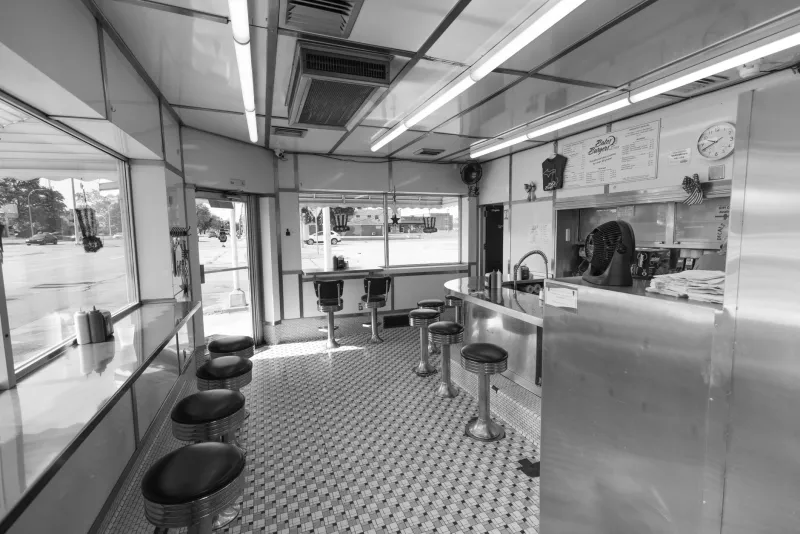
There's a reason the three-martini lunch became a cultural shorthand for an entire era of American business. It wasn't just about the drinks. It was about the ritual of shared time, the social intelligence required to read a room, and the implicit understanding that a deal made over a meal carried a different kind of weight than one sealed with a signature alone.
The men and women who built industries in the postwar decades operated on a simple but sophisticated premise: you do business with people you know, and you get to know people in person. Your word meant something because your face was attached to it. Your reputation traveled ahead of you not through a search engine but through a network of people who had actually sat across from you.
That wasn't inefficiency. That was infrastructure.
The mid-century business culture that Royce 59 keeps circling back to had its flaws — plenty of them — but it understood something about human nature that no platform has successfully digitized: people make high-stakes decisions based on gut feeling, and gut feeling requires physical presence to calibrate.
The New Old Crowd
Walk into certain coffee shops in Nashville, certain private dining rooms in Chicago, certain back booths in Los Angeles right now, and you'll find a quietly growing cohort of people doing business the old way. Designers, musicians, producers, small-batch founders, independent filmmakers. They're not networking in the performative sense. They're just... talking. Building things together over time, the way it used to be done.
Ask them why they've stepped back from the digital hustle and you hear variations on the same theme. I got tired of performing. I couldn't tell who was real. I made my best connections by accident, in actual rooms.
There's a generational wrinkle here worth noting. Some of the most enthusiastic practitioners of this face-to-face revival are younger entrepreneurs in their late twenties and early thirties — people who grew up entirely inside the digital ecosystem and are now, deliberately, building something outside it. They're drawn to the analog approach not out of nostalgia but out of genuine curiosity. They've read about the handshake economy the way earlier generations read about foreign places. And they want to go.
Reading the Room Is a Skill
Here's the thing nobody talks about enough: in-person networking is hard. It requires a set of skills that atrophy fast when you stop using them. You have to listen without composing your response simultaneously. You have to pick up on hesitation, enthusiasm, discomfort. You have to know when to push and when to let silence do the work.
Those skills used to be considered basic professional literacy. Now they read almost like a superpower.
The people who've kept them sharp — or who are working to rebuild them — talk about the advantage in almost physical terms. You can feel when a conversation is going somewhere real. You can tell within twenty minutes whether someone is the kind of person who follows through. You walk away from a good lunch knowing things about a potential partner that six months of email exchange wouldn't reveal.
That's not mysticism. That's bandwidth. Human beings process an enormous amount of information in face-to-face interaction — tone, body language, timing, energy — and all of it feeds into the assessment of trust. Strip that away and you're making decisions with a fraction of the data.
The Verbal Agreement Is Back (Sort Of)
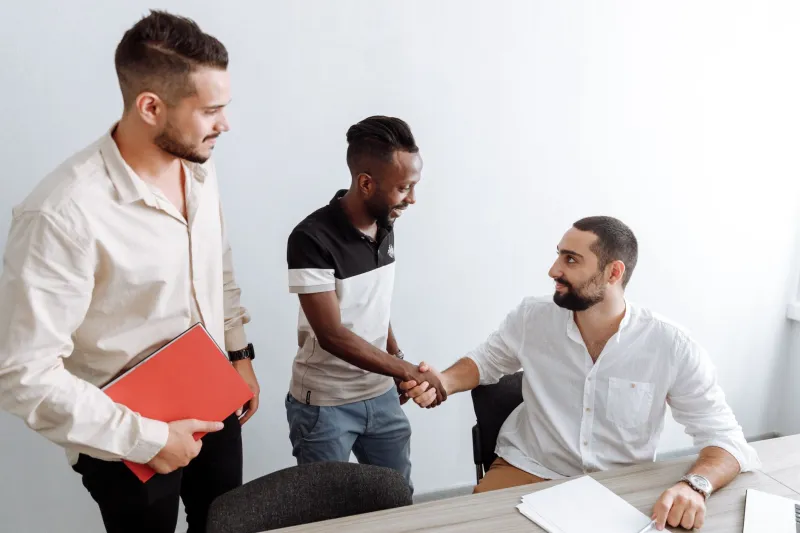
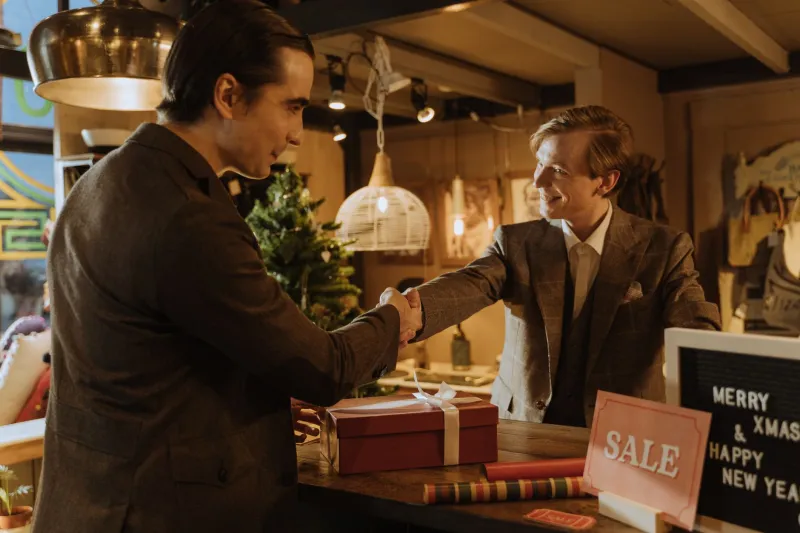
The verbal agreement — the handshake deal, the gentleman's understanding — had a long run before lawyers made it complicated and the internet made everything documented. It's not coming back in its purest form; we live in a world of contracts and that's probably fine. But the spirit of it is resurging in interesting ways.
A growing number of collaborations in the creative industries are being initiated, and sometimes substantially shaped, through conversations that happen entirely off the record. Two people decide they trust each other. They figure out the terms in a room. The paperwork comes later, almost as a formality. The real agreement — the one that determines whether the thing actually works — happened over coffee.
That's not recklessness. That's a return to the understanding that a deal is only as good as the people making it, and that you learn who those people are by spending time with them.
Presence as a Professional Statement
There's one more dimension to this worth sitting with. In a world where everyone is reachable and no one is fully present, showing up — physically, attentively, without a phone face-down on the table — has become its own kind of signal.
It says: I think this conversation is worth my undivided attention. And in 2024, that's a rarer gift than most people realize.
The golden era of American business wasn't golden because everything was perfect. It was golden, in part, because the people in it understood that relationships were the actual product. The deal was downstream of the connection. The connection required presence.
That lesson didn't expire. It just got buried under a lot of notifications.
Time to clear the table, order something good, and have a real conversation.