Hiss, Warmth, and Intention: The Bedroom Producers Bringing Tape Back From the Dead
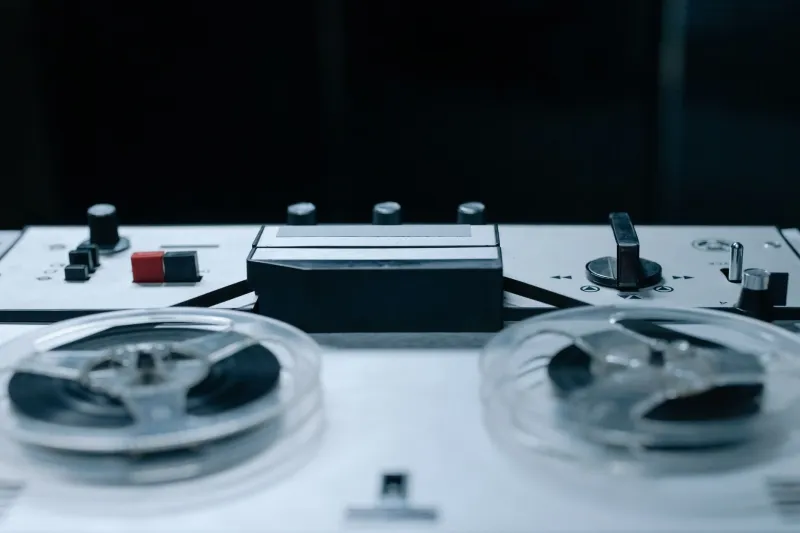
Marcus keeps his TASCAM 388 in the corner of his one-bedroom apartment in East Nashville, next to a rack of analog synths and a shelf of half-inch tape reels organized by session date. The machine is from 1983. It weighs about as much as a small refrigerator. It took three people to get it up the stairs.
He wouldn't trade it for anything.
"When I record to tape, I have to mean it," he says, threading a fresh reel with the practiced ease of someone who's done it a thousand times. "Every take costs me something. That changes how I play."
Marcus is not alone. Across the country — in converted closets in Detroit, basement studios in Philadelphia, spare bedrooms in Los Angeles — a growing community of musicians and producers is turning away from the frictionless perfection of digital audio workstations and reaching instead for machines that hiss, saturate, and occasionally eat your session whole. They're doing it on purpose. And the music they're making sounds like nothing else being released right now.
The Problem With Perfect
Digital audio recording, done right, is extraordinary. The clarity is genuinely remarkable. You can record a pin drop in a room and capture it with scientific precision. You can tune every note, quantize every beat, and stack hundreds of tracks without a single generation of quality loss.
You can also produce something that sounds like it was assembled by a very talented machine, which is increasingly the problem.
The pursuit of technical perfection in recorded music has been accelerating since the late '80s, and somewhere along the way it started to cost something. The breath before the chorus. The slight drag on the snare. The way a piano note blooms and then fades in a way that no sample can quite capture. These are the moments that make recorded music feel inhabited by actual human beings, and they are exactly the moments that digital production is designed to correct.
Tape doesn't correct them. Tape embraces them, shapes them, and gives them a physical texture that audiophiles have been trying to describe for decades. Warmth is the word people reach for most often, and it's not quite right, but it's not quite wrong either.
What Tape Actually Does
Let's get a little technical for a second, because it matters.
When audio is recorded to magnetic tape, several things happen that have no digital equivalent. The tape saturates — meaning that as signal levels increase, the tape naturally compresses and adds harmonic content, particularly second-order harmonics that the human ear finds pleasing. The high frequencies roll off gently rather than cutting abruptly. There's a noise floor — that famous hiss — that, paradoxically, makes quiet passages feel more present rather than less.
Tape also has what engineers call "wow and flutter," microscopic variations in the speed at which the tape moves past the record head. In large amounts, this is a defect. In small amounts — which is what you get from a well-maintained machine — it adds a subtle, organic movement to sustained notes that digital recordings simply don't have.
None of this is accidental. It's physics. And it's what producers have been spending enormous amounts of money trying to simulate with plug-ins, with varying degrees of success, for thirty years.
The bedroom tape revival is, in part, a response to the futility of that simulation. Why spend $300 on a plug-in that approximates tape saturation when you can spend $400 on a functioning Tascam Portastudio and just use actual tape?
The Economics of Commitment
Here's the thing about tape that nobody mentions when they're waxing poetic about warmth and saturation: it costs money every time you press record.
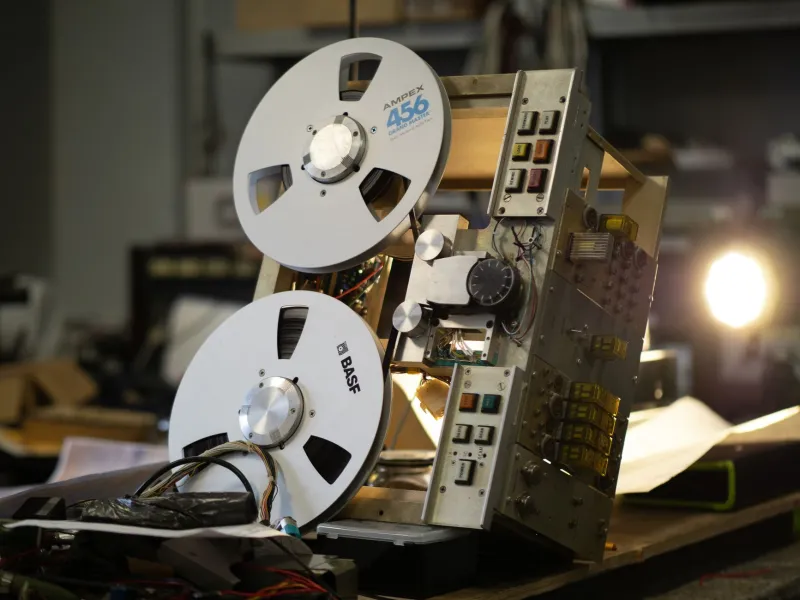
A reel of quality half-inch tape runs anywhere from $30 to $80, depending on the formulation. A session on a properly maintained eight-track reel-to-reel machine might eat through a reel in an afternoon. There's no unlimited undo. There's no "save a copy just in case." When you splice tape to edit it, you are literally cutting the magnetic medium with a razor blade and reassembling it by hand — a skill that takes time to learn and has no digital equivalent.
This is not a bug. For the musicians drawn to tape recording, the cost and commitment are central to the appeal.
"I used to record 40 takes of a vocal and then spend a week comping them together," says a producer based in Chicago who now records almost exclusively to a vintage Ampex eight-track. "Now I do three takes, pick the best one, and move on. The performance is better because the stakes are real."
That psychological shift — from infinite possibility to deliberate choice — runs through every conversation about analog recording. Tape forces intention. And intention, it turns out, is audible.
The Machines Are Out There
One practical question the tape revival raises: where are people getting these machines?
The answer is everywhere, if you know where to look. Estate sales. Recording studios that upgraded to digital in the '90s and stored their old gear in closets. eBay listings from church basements and public access television stations. A functioning TEAC or TASCAM four-track from the early '80s can still be found for under $200 if you're patient and willing to do some cleaning and maintenance.
The higher-end machines — Studer, Ampex, MCI — require more investment and more expertise to maintain. But a community of technicians has grown up around the revival, people who learned to repair these machines decades ago and are now busier than they've been since the early '90s.
Steve Albini, the legendary recording engineer who spent decades advocating for analog recording, built his career on the premise that the best-sounding records were made with real rooms, real microphones, and real tape. His influence echoes through the current generation of tape enthusiasts, many of whom cite his work with bands like Pixies and PJ Harvey as the reason they started investigating analog recording in the first place.
Sound as a Values Statement
There's a bigger argument embedded in all of this, one that connects the tape revival to every other analog resurgence happening right now — the vinyl boom, the film photography comeback, the return of the hand-knit and the hand-thrown and the hand-written.
Choosing tape is choosing to make something that required actual time and actual skill and actual physical materials. It's choosing to make something that sounds like it was made by humans, in a room, with instruments, on a specific afternoon in a specific year. It's choosing impermanence over perfection and presence over polish.
The music that comes out of Marcus's East Nashville apartment sounds like it was recorded in 1974, except that it couldn't have been, because nobody was making music quite like this in 1974. It has the warmth and the grain of that era but the emotional vocabulary of right now.
That's the magic trick the tape revival is pulling off. Not nostalgia. Something more interesting than nostalgia.
The hiss isn't a flaw. It's the sound of time being spent on something that matters.