Grain, Grit, and No Algorithm: Why Film Photographers Are Done Letting the Phone Decide
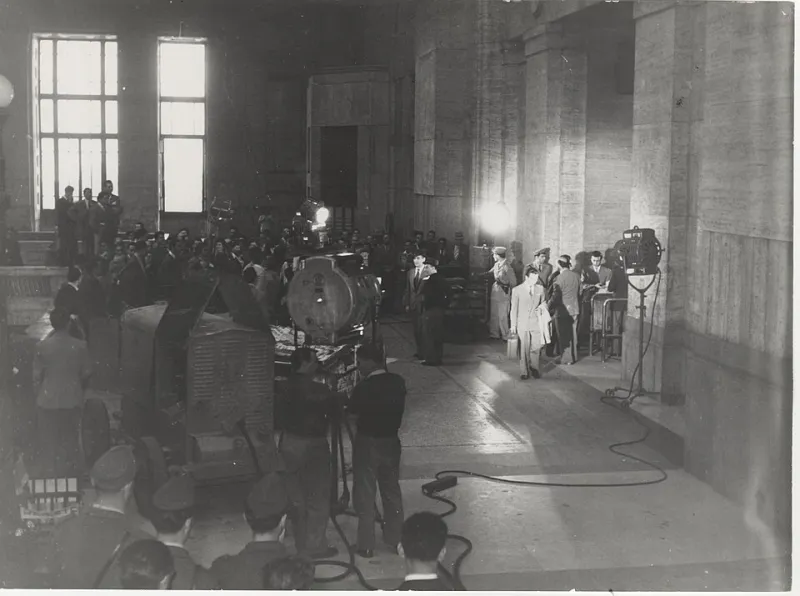
Photo: Unknown authorUnknown author, CC BY-SA 4.0, via Wikimedia Commons
There's a particular kind of frustration that builds slowly. You pull out your phone, point it at something genuinely beautiful — maybe it's the late afternoon light cutting through a diner window, or your grandmother's hands wrapped around a coffee cup — and the camera thinks for half a second before delivering something technically flawless and completely dead. The shadows are lifted. The highlights are tamed. The noise is scrubbed clean. And whatever it was you actually saw is gone, replaced by a version of the scene that exists only in the phone's best guess at what you probably wanted.
That frustration, multiplied across a generation of photographers who grew up shooting digitally, is quietly fueling one of the more interesting aesthetic rebellions of the last few years.
The Machine That Thinks It Knows Better
Computational photography has gotten extraordinarily good at producing images that most people would call great. Night mode, portrait mode, HDR processing, AI-assisted color grading — modern smartphone cameras are engineering marvels that can outperform dedicated digital cameras in certain low-light situations. Nobody serious is disputing that.
What's being disputed is something harder to quantify: the idea that optimization is the same thing as truth.
When your phone's camera fires, it's not capturing a single frame. It's stacking multiple exposures, running them through machine learning models trained on millions of images, and making thousands of micro-decisions about what your photo should look like. The result is usually pleasant. It is almost never surprising. And surprise — the accidental, the awkward, the slightly-wrong thing that turns out to be the whole point — is where most of photography's best moments live.
Film doesn't negotiate. You set your exposure, you compose your frame, you press the shutter. What happens next is between you, the light, and the chemistry. The camera has no opinions.
Who's Actually Making the Switch
Walk into any serious camera shop in New York, Chicago, or Los Angeles right now and you'll notice the used film gear moving faster than anyone expected a few years ago. Pentax K1000s. Olympus OM-1s. Minolta SRTs. Cameras that were collecting dust in estate sale boxes are back on the shelf with price tags that would have seemed absurd in 2010.
The people buying them aren't exclusively gray-haired enthusiasts chasing memories. A significant chunk of the market is under 35 — photographers who learned on digital, built followings on Instagram, and then hit a wall where everything they made started looking like everything else.
For a lot of them, the switch wasn't about aesthetics first. It was about attention. Shooting on film forces a kind of deliberateness that digital — and especially smartphone — photography actively discourages. You have 24 or 36 frames on a roll. You pay for every shot twice: once when you buy the film, once when you develop it. That cost, both financial and psychological, changes how you stand in front of a subject. You wait. You think. You commit.
Natural Light as a Philosophical Position
The conversation around film photography almost always circles back to light — specifically, the way film handles it differently than a sensor does. Film has latitude, a word photographers use to describe how gracefully a medium handles the transition between bright areas and dark ones. Good film stock can hold onto shadow detail while letting highlights bloom in a way that feels organic rather than calculated.
But there's something else going on beyond the technical. Choosing to shoot only in natural light, to reject the artificial fill and the ring light and the LED panel, is increasingly being understood as a statement about what you think photography is for.
If the phone's job is to make the scene look as good as possible, the film photographer's job — at least as many of them describe it — is to record what was actually there. The unflattering shadow under someone's chin. The way the color shifts when a cloud passes. The slight motion blur that proves someone was alive and moving in that moment. These aren't flaws to be corrected. They're evidence.
The Darkroom as Counterculture
Something else is happening alongside the film revival that doesn't get talked about as much: darkroom work is coming back. Community darkrooms in cities like Portland, Austin, and Brooklyn have waiting lists. Photography schools that had mothballed their wet labs are quietly reopening them.
The darkroom is, by design, the opposite of the cloud. There is no undo. There is no version history. You make a print, you look at it, you decide what to change, and you make another one. The process is slow, physical, and — this is the part people keep mentioning — genuinely absorbing in a way that editing on a screen rarely is.
There's a reason people come out of a darkroom session talking about it the way they talk about a long run or a good meditation. You were somewhere specific, doing one thing, with your hands.
Integrity Over Perfection
The word that keeps coming up, in interviews with working photographers and in the communities that have formed around film on social platforms, is integrity. Not in a moral sense, exactly — nobody's claiming that shooting digital makes you a bad person. More in the structural sense: the integrity of an image that hasn't been reconstructed by software. A picture that shows you what the light was actually doing.
In an era when every image is suspect — when AI can generate a photorealistic scene from a text prompt and deepfakes have made us distrust our own eyes — there's something almost political about a photograph you can hold up to scrutiny. This is what the grain looks like. This is how the shadows fell. I was here, and I didn't touch it.
That's not nostalgia. That's evidence. And right now, evidence feels like the rarest thing in the room.