Dog-Eared and Deliberate: The Quiet Comeback of the Print Literary Magazine
Somewhere between your third doomscroll session of the morning and the fourteenth notification you've ignored since breakfast, a different kind of reading experience exists. It involves paper. It smells faintly of ink. It does not refresh itself, push alerts, or suggest what you should consume next. It simply sits there, patient and unhurried, waiting for you to come to it on its own terms.
Print literary magazines — the kind that run long-form fiction, deeply reported essays, and poetry that doesn't apologize for being difficult — are having a moment. Not a viral moment. Not a trending-on-socials moment. Something quieter and, frankly, more interesting than that.
The Numbers Don't Lie (Even If the Algorithm Does)
Subscriptions to independent literary journals have been climbing steadily since 2020, a trend that surprised even the editors who'd been quietly keeping the lights on for years. Publications like The Paris Review, Ploughshares, Tin House, and The Kenyon Review have all reported meaningful upticks in print subscriptions — not digital, print — from readers who are, by their own description, exhausted.
And it's not just the legacy names. Regional journals with small but devoted readerships — the kind published out of university basements and independent presses in cities like Portland, Nashville, and Iowa City — are seeing wait lists for contributor slots and sold-out issues that would have been unthinkable a decade ago.
The editorial director of one Midwest-based quarterly put it plainly in a recent interview: "We didn't do anything different. The world just got louder, and people remembered we were here."
What the Feed Can't Give You
Here's the thing about algorithmic content: it's optimized to keep you moving. Every piece of writing that lives inside a platform — whether it's a newsletter, a social post, or an article served up by a recommendation engine — exists in competition with everything else on your screen. The moment your attention wavers, something new slides in to replace it.
A printed literary magazine operates on entirely different physics. There's no competing tab. No comment section loading underneath the poem you're trying to read. No autoplay. The experience is, by design, singular.
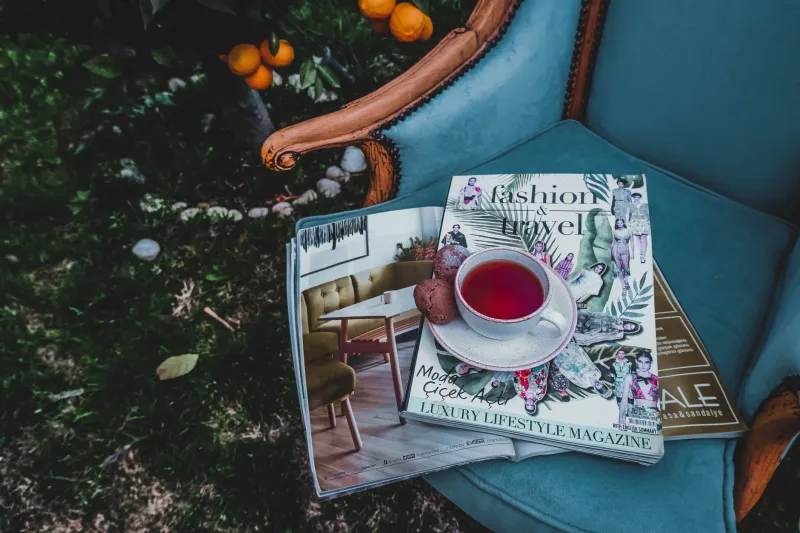
Readers who've returned to print describe something almost ritualistic about the process. You make coffee. You find a chair. You open the magazine. Some of them describe it the way people talk about vinyl records — the deliberate act of choosing to engage, the tactile pleasure of the object itself, the way the format slows you down in ways you didn't know you needed.
One subscriber in her early thirties, a marketing professional in Chicago, described her Saturday morning routine with her copy of The Sun magazine as "the only hour of the week where I'm not performing attention for something else." That line is worth sitting with.
The Curation Question
There's also something to be said for the editorial hand. Literary magazines are, at their core, an act of taste-making — a small group of editors who have read widely and thought carefully, deciding what deserves space on the page. That's a very different relationship than a feed that learns your habits and feeds them back to you slightly amplified.
The best literary journals have always functioned as a kind of cultural memory. The Paris Review ran interviews with writers like Hemingway, Faulkner, and Toni Morrison that remain some of the most illuminating documents of American literary life ever produced. Poetry magazine published T.S. Eliot and Gwendolyn Brooks. These weren't algorithmic accidents. They were the result of editors with conviction.
That tradition of curatorial courage is exactly what draws a certain kind of reader back. When you open a journal and find a story you've never heard of by a writer you don't recognize, and it stops you cold — that's not something a recommendation engine can replicate. It's discovery in the oldest sense.
The Object Itself
Let's not underestimate the physical dimension of this. Literary magazines have gotten genuinely beautiful. Independent publishers, freed from the constraints of mass-market newsstand economics, have invested in design, paper stock, and typography in ways that make their issues feel like artifacts worth keeping.
Some readers have shelves dedicated to back issues. Others leave them on coffee tables the way people used to display art books. A well-designed issue of Zoetrope: All-Story or A Public Space isn't just something you read — it's something you own, something with weight and texture that signals a certain set of values about how you want to spend your time.
There's a reason people Instagram their reading stacks. The physical magazine has become, in its own understated way, a kind of statement.
The Golden Era Connection
None of this is entirely new, of course. The mid-century golden age of American letters was built on exactly this kind of publication. The little magazines of the 1940s and '50s — The Partisan Review, The Hudson Review, Evergreen Review — were the infrastructure of serious literary culture. They're where ideas got argued, where new voices broke through, where the conversation happened before it moved anywhere else.
What feels different now is the self-awareness. Today's literary magazine subscriber often knows exactly what they're choosing and why. They're not just reading — they're opting out of something, making a deliberate bet on depth over volume, on curation over curation-by-algorithm.
That's a choice with roots. And like most things with roots, it turns out to be more durable than anyone expected.
Settling In
If you haven't picked up a literary magazine lately, there's never been a better time to start. Most journals offer affordable annual subscriptions, and many independent bookstores carry a rotating selection. The Paris Review, One Story, Granta, McSweeney's — any one of them will do the job.
Pour something warm. Find a chair that doesn't face a screen. Open to the first page.
You already know how to do this. You just forgot it was still an option.