Pick Up the Receiver: The Quiet Cult of Rotary Phones and the Machines That Push Back
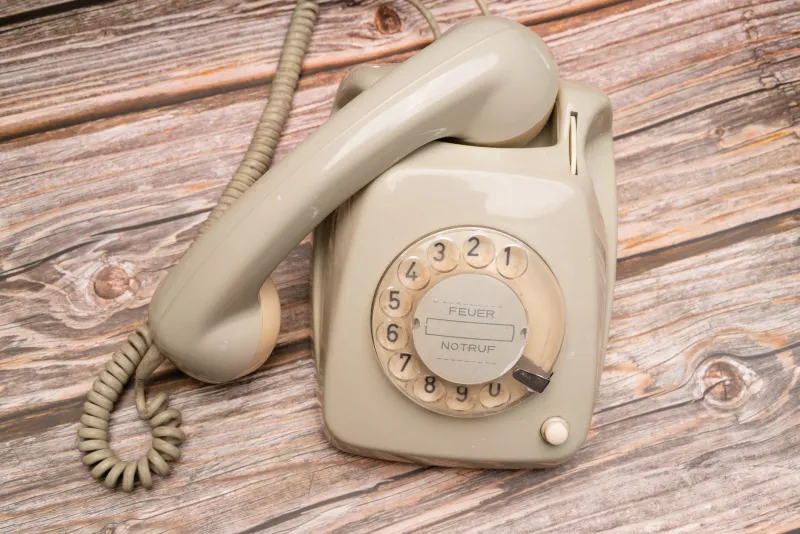
Somewhere in a Brooklyn apartment, a 26-year-old graphic designer has a rotary phone on her desk. It's a Western Electric 500 in harvest gold, the kind that sat on American kitchen counters from the late fifties through the early eighties. It doesn't work — the line isn't connected to anything. She didn't buy it to make calls. She bought it, she'll tell you, because it doesn't do anything she didn't ask it to do.
That sentence, when you sit with it, explains a lot.
The Device That Doesn't Want Anything From You
Every piece of technology you use in 2024 is, at some level, trying to get something from you. Your phone wants your attention, your location, your purchasing history, your face. Your laptop wants you to update, to subscribe, to enable notifications, to connect. Even your television has opinions about what you should watch next.
Mid-century mechanical devices had none of these ambitions. A rotary phone rang when someone called and went silent when they didn't. A typewriter produced text when you struck the keys and waited patiently when you didn't. A mechanical clock told you the time and asked nothing in return. These machines were tools in the purest sense — they extended your capability without inserting themselves into your experience.
For a generation that has grown up inside devices that are constantly, relentlessly interactive, this passivity is not a limitation. It is the entire appeal.
Flea Markets, Estate Sales, and eBay at Midnight
The market for vintage mechanical devices has been quietly heating up for several years. Rotary phones that sold for a few dollars at estate sales in the early 2010s now command $50 to $150 depending on condition and color. Certain colors — turquoise, harvest gold, avocado green — carry a premium that would have seemed absurd when these phones were considered worthless relics.
Mechanical typewriters tell a similar story. Olivetti Lettera 32s. Royal Quiet De Luxes. Hermes 3000s. The machines that working writers carried through the mid-twentieth century have become objects of genuine desire, and not just for writers. People who have no particular attachment to the act of writing are buying typewriters and putting them on desks in home offices, in bedrooms, in living rooms.
The reasons people give for buying these objects are remarkably consistent. They wanted something physical. They wanted something that required effort. They wanted something that didn't connect to anything.
The Feedback Loop You Can Feel
There's a concept in design called haptic feedback — the physical sensation that tells your body a machine has registered your input. Your phone vibrates when you tap it. The click of a mechanical keyboard confirms the keystroke. Modern designers spend enormous effort engineering these micro-sensations because they matter to how we experience technology.
Mid-century mechanical devices had haptic feedback that no modern touchscreen can approach. The rotary dial has resistance and a satisfying return click. The typewriter key requires genuine force and rewards it with the smack of type against paper and the ring of the carriage bell. The wind-up clock ticks with a physical presence that a digital clock simply doesn't have.
For people who spend their days moving their fingers across glass surfaces that register touches imperceptibly, these sensations are almost revelatory. The machine pushes back. It has weight and friction and consequence. You can feel that you did something.
Slowness as a Practice
One of the things people who work with vintage mechanical devices consistently report is that the devices change how they work. A typewriter slows you down. You can't delete. You can't cut and paste. You can't open seventeen browser tabs while you're writing. The machine enforces a kind of singular attention that the computer actively undermines.
This is being understood less as a limitation and more as a feature. The mindfulness movement has spent years trying to get people to do one thing at a time, to be present, to resist the pull of distraction. The rotary phone and the typewriter achieve this structurally, without requiring willpower or a meditation practice. The device itself makes multitasking impossible.
There's something almost funny about paying premium prices for technology that's less capable. But the incapability is load-bearing. The rotary phone that can't run apps can't distract you from the conversation you called to have. The typewriter that can't access the internet can't pull you away from the page.
The Mid-Century Object as Cultural Shorthand
These devices also carry meaning beyond their function. A rotary phone or a mechanical typewriter is a physical piece of a specific era — the postwar American decades when consumer technology was built to last, designed to look good, and made from materials that aged well rather than degrading into yellowed plastic.
In a house or apartment, these objects communicate something about how their owner thinks about time and quality and the relationship between humans and machines. They're totems of a moment when technology was in service of people rather than the other way around. Whether that moment was actually as simple and satisfying as these objects suggest is almost beside the point. The objects carry the idea of it.
And right now, the idea of a machine that does exactly what you tell it, nothing more, is genuinely appealing to a lot of people who spend their days being told what their machines think they should do next.
The Rebellion That Doesn't Make Headlines
Nobody is writing manifestos about rotary phones. There's no organized movement, no think-piece consensus, no political party of the mechanical device enthusiast. This is a quiet rebellion, conducted one thrift store purchase at a time, in apartments and home offices across the country.
But rebellions don't always announce themselves. Sometimes they show up as a harvest gold telephone on a graphic designer's desk in Brooklyn, connected to nothing, asking nothing, just sitting there being exactly what it is.
That's enough. Right now, that's more than enough.