Thirty-Six Frames to Get It Right: The Film Photographers Who Made Limitation Into a Philosophy
Somewhere in a converted garage in East Nashville, a group of people are standing in near-total darkness, their hands moving carefully through trays of chemical solution, watching images appear on paper like something being summoned rather than manufactured. Nobody is checking their phone. Nobody is talking much. The smell of developer and fixer hangs in the air — a smell that, once you know it, never really leaves you.
This is a darkroom workshop. It sold out in forty-eight hours.
Film photography is back — not as a novelty, not as a filter aesthetic, but as a genuine practice with real stakes and a growing community of people who believe that choosing a harder, slower, more expensive medium is actually the smarter creative decision. The reasons why say something interesting about where we are right now.
The Constraint Is the Point
Here's the basic math that governs film photography and makes it so different from anything digital: you get thirty-six exposures on a standard roll of 35mm film. Maybe twenty-four if you're shooting medium format. Each frame costs money — the film itself, plus development, plus printing if you want prints. There is no preview screen. There is no undo.
You point the camera, you make a decision, you press the shutter. Then you live with it.
For photographers who've grown up in the digital era, this constraint can feel alarming at first. For many of them, it quickly becomes the most valuable creative lesson they've ever learned.
"I was shooting digital and I was taking three hundred photos every time I went out," says Priya K., a 26-year-old photographer in Los Angeles who switched to film two years ago and hasn't looked back. "And most of them were garbage, but it didn't matter because I had two hundred and ninety-seven others. When I switched to film, I had to actually think before I shot. I had to ask myself: is this the picture? Is this worth a frame?"
That question — is this worth a frame? — turns out to be a profound one. It changes how you look at the world. It slows you down in a way that feels, paradoxically, more productive.
The Revival Is Real, and It Has Numbers
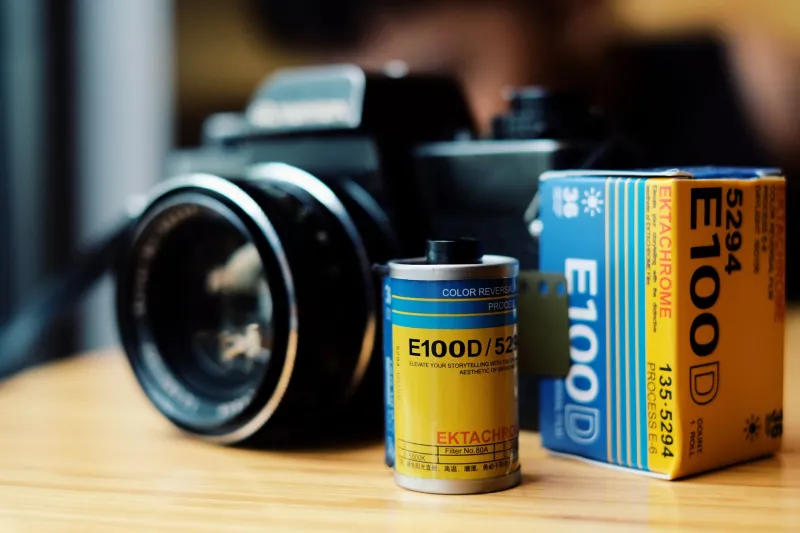
This isn't just anecdote. Kodak brought Ektachrome back from the dead in 2018 after discontinuing it in 2012, citing renewed demand. Ilford, the legendary British film manufacturer, has reported consistent sales growth throughout the 2020s. Film stocks that were once considered niche or obsolete are now commanding premium prices — and sometimes selling out entirely.
The used camera market has gone a little crazy. A Pentax K1000 that might've sold for thirty dollars at an estate sale in 2015 now routinely fetches over a hundred. Canon AE-1s — the camera that defined the late-'70s snapshot era and became the default starter film camera for a new generation — sell for two hundred dollars or more in good condition. Supply hasn't kept up with demand, and some classic bodies have become genuinely difficult to find at reasonable prices.
Darkroom space is following the same trajectory. Community darkrooms in cities like New York, Chicago, Portland, and Austin are operating at capacity, running waitlists for membership and selling out workshops faster than they can schedule them. College photography programs that had mothballed their darkrooms are quietly reopening them.
Shooting Film as a Way of Seeing
Ask a film photographer why they do it and the answers tend to cluster around a few themes: the aesthetic quality of film grain, the surprise of not knowing exactly what you got, the physical reality of a negative that exists in the world. But the deepest answer — the one that takes a little longer to articulate — is usually something about attention.
Film forces you to be present. Not in a mindfulness-app way, but in a practical, mechanical way. You have to think about light, about framing, about timing. You can't spray and pray and sort it out later. The camera doesn't do the thinking for you.
"Digital photography made me lazy in ways I didn't even notice," says Jordan F., a 33-year-old commercial photographer in Chicago who now shoots personal work exclusively on film. "I'd think, I'll fix that in post. I'll crop it differently. I'll take another one. Film took all of that away. Now I'm actually making photographs instead of collecting raw material to process later."
This distinction — making photographs versus collecting material — comes up constantly in conversations with film shooters. It points to something real about how the medium changes the creative process at a fundamental level.
The Community in the Chemicals
One of the more unexpected things about the film revival is how social it's become. There are film photography meetups in most major American cities. Online communities — particularly on Reddit and a handful of dedicated forums — run film swaps where participants shoot the same roll and share the results. Zines dedicated to film photography are being printed and distributed at camera shops and art markets from coast to coast.
The darkroom workshop in East Nashville mentioned at the top of this piece is run by a 28-year-old named Callie S. who learned to develop film from her grandfather and started teaching others when she realized how many people were hungry for it.
"People want to make something with their hands that doesn't live on a screen," she says, watching a print emerge in the developing tray. "They want to hold it. They want it to be real. Film gives you that. You did this. There's a physical object that proves it."
In that sense, the film photography revival rhymes with every other analog comeback of the past decade — vinyl records, fountain pens, handwritten letters, print magazines. The thread running through all of them is the same: a hunger for things that take time, require care, and leave evidence of themselves in the physical world.
Thirty-six frames. Choose carefully. Make them count.