Popcorn, Presence, and a Little Bit of Defiance: Why the Single-Screen Theater Is Having Its Moment
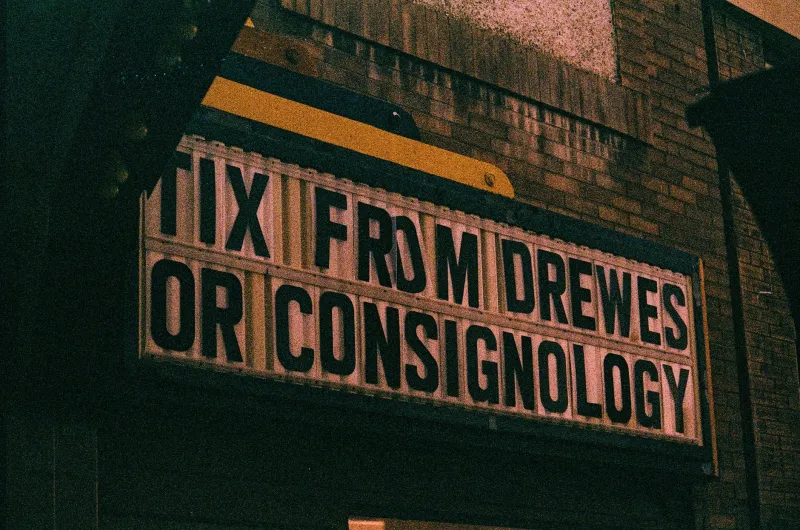
There's a marquee on the main drag of a small Ohio town that has been hand-lettered every single week since 1948. The guy who changes the letters is seventy-one years old. He does it on Tuesday mornings, climbs the same ladder his predecessor climbed, slots the same chunky plastic characters into the same rusted tracks — and when he's done, a handful of people slow their cars to read it. Some of them take a photo. Some of them just smile.
That marquee is not a relic. It's a declaration.
All across the United States, independent movie theaters — the single-screens, the art houses, the old converted vaudevilles with their gilded ceilings and creaky seats — are pushing back against the tide of streaming culture in a way nobody really predicted. Not loudly. Not with a manifesto or a hashtag campaign. Just by continuing to exist, and by reminding people what it actually feels like to go to the movies.
The Algorithm Didn't Ask What You Were in the Mood For
Here's the thing about streaming: it gives you everything and somehow makes it feel like nothing. You've been there. You open the app, scroll for twenty minutes, watch the first three minutes of something, abandon it, scroll again. The paradox of choice is real, and it's exhausting. The algorithm thinks it knows you, but it mostly just knows what you watched last Tuesday at 11pm when you were half-asleep.
Independent theaters operate on an entirely different logic. Somebody — a real human being with taste and conviction — decided that this film was worth screening. That curatorial act is almost radical by contemporary standards. When the Alamo Drafthouse in Austin books a double feature of two 1970s Italian crime films you've never heard of, or when the Music Box Theatre in Chicago runs a month-long retrospective of a director whose name you can barely pronounce, they're making a statement: we think this is worth your time, and we think you're worth the effort of showing it to you properly.
That's not an algorithm. That's a point of view.
The Ritual Is the Point
Ask anyone who's become a regular at an indie theater why they keep coming back, and the word you'll hear over and over isn't film — it's ritual. The getting ready. The drive. The decision of where to sit. The smell of real butter on popcorn that costs slightly too much and tastes completely worth it. The moment the house lights dim and everyone in the room, strangers every one of them, collectively agrees to pay attention to the same thing at the same time.
That shared agreement is something streaming can never replicate, no matter how good the home theater setup gets. Watching a movie alone on your couch is a fine and valid experience. Watching it in a room full of people who laughed at the same moment, gasped at the same twist, sat in stunned silence together after the credits rolled — that's a different category of experience entirely. It's communal. It's almost liturgical.
Theater owners who've survived the streaming era tend to understand this instinctively. Margaret Hollis, who runs a 1930s-era single-screen in western Pennsylvania that her grandmother opened, puts it plainly: "People don't just come here to watch a movie. They come here to be somewhere. To be part of something. My grandmother understood that. I think we forgot it for a while, and now people are remembering."
Small Screens, Big Personalities
What distinguishes the indie theater world from the multiplex isn't just the programming — it's the personality. These places have character in the old-fashioned sense of the word. The owner knows your name. The concession stand might sell local craft beer alongside the Junior Mints. The pre-show playlist is a genuine reflection of someone's actual taste in music, not a licensed package of inoffensive background filler.
Some theaters have leaned into this identity with real creativity. The Loft Cinema in Tucson hosts post-screening discussions that regularly run longer than the films themselves. The Coolidge Corner Theatre in Brookline, Massachusetts, runs midnight shows of cult classics that pack the house with regulars who've seen the films a dozen times and are there as much for the crowd as for the movie. The Bijou Film Center in Knoxville has built a reputation for screening works from regional filmmakers that would never get a look-in at a chain.
These aren't desperate survival strategies. They're what happens when a venue knows exactly who it is.
The Pandemic Plot Twist
Conventional wisdom after 2020 said the independent theater was finished. Streaming numbers exploded, studios experimented with simultaneous releases, and the multiplex chains — flush with corporate resources — were barely hanging on. For a single-screen operation without a hedge fund behind it, the math looked grim.
What happened instead was more complicated. Some theaters did close, and those losses were real and painful. But others came out of the shutdown with a clarified sense of purpose. Audiences who had spent months watching everything available on every platform emerged with a hunger for something the platforms couldn't provide. Ticket sales for independent venues in late 2021 and through 2022 surprised even the most optimistic operators. People weren't just willing to come back — they were eager.
The pandemic, weirdly, reminded people what they missed about going out to the pictures. The absence made the ritual visible again.
What the Chains Can't Copy
The major theater chains have noticed. They've introduced premium formats, recliner seats, dine-in options, loyalty apps. They're trying to sell an experience now rather than just a screen. And some of it works, in a theme-park sort of way.
But what they can't manufacture is authenticity. They can't bottle the feeling of watching a forty-year-old film in a room that was actually built around the same time. They can't replicate the relationship between a devoted programmer and a loyal audience built over years of trust. They can't fake the thing that happens when a theater becomes genuinely woven into the fabric of a neighborhood — when it's the place where a couple had their first date, where a kid saw something that changed how they understood the world, where a community gathered after something terrible happened because they needed to be together in the dark for a little while.
That's not a feature. That's a history.
The Marquee Stays Lit
Back in Ohio, the Tuesday morning letter-changing continues. The films that play there aren't always the ones getting the most social media buzz. Sometimes they're old. Sometimes they're foreign. Sometimes they're small American films that got buried under the weight of the blockbuster release schedule.
But the seats fill up. Not every night, not always. But enough. Enough to matter.
There's something quietly defiant about that — about the insistence that a movie is worth leaving your house for, worth sitting next to strangers for, worth the full, undivided, phone-in-pocket attention it was made to receive. In a culture that increasingly optimizes for convenience and frictionlessness, the independent movie theater is one of the last places that asks something of you.
And apparently, a lot of people are relieved to be asked.